 EN
EN

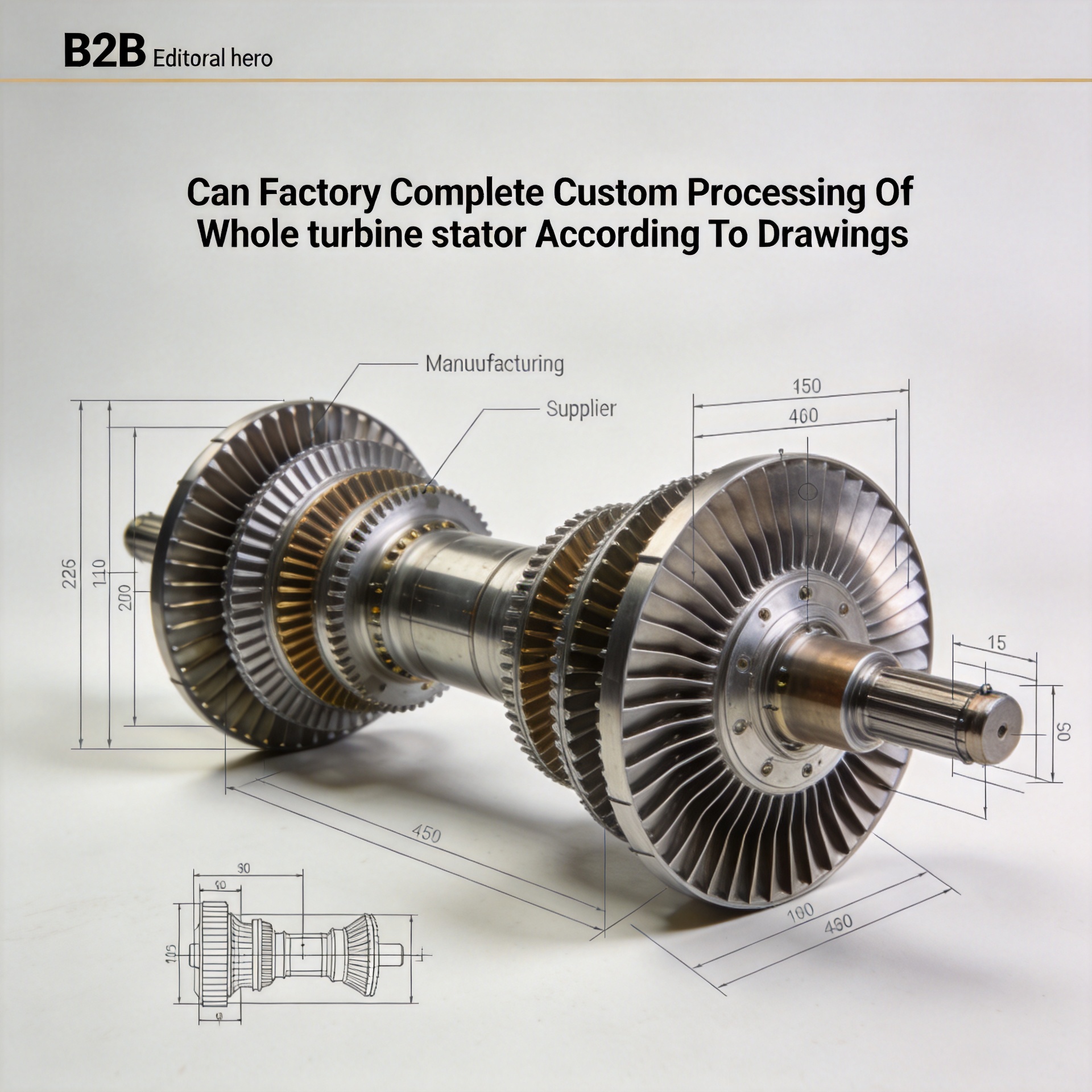
Can Factory Complete Custom Processing Of Whole Turbine Stator According To Drawings?
If you are managing a gas turbine overhaul or sourcing replacement components for a non-standard or legacy machine, this question comes up sooner or later: can a factory take your engineering drawings and deliver a whole turbine stator that fits and performs correctly? The short answer is yes — but the real question is whether a given factory has the process capability to back that up, not just the willingness to accept the order.
What Is a Turbine Stator and Why Custom Processing Matters
In a gas turbine, the turbine stator is the stationary assembly that directs working fluid onto the rotating blades at the correct angle and velocity. Unlike rotor blades, stator vanes do not spin, but they are subject to high thermal loads, significant pressure differentials, and fluid-induced mechanical stress. Dimensional accuracy in the turbine stator directly affects the aerodynamic efficiency of the stage, which means tolerances in the vane profile, spacing, and attachment geometry are engineering-critical, not cosmetic.
For standard in-production turbine models, OEM replacement stator components are often available. The challenge arises when dealing with legacy equipment, a turbine model with limited aftermarket support, or a retrofit application that requires non-standard geometry. In those cases, drawing-based custom processing is the practical path — and the choice of factory makes a measurable difference in outcome.
Can a Factory Process a Whole Turbine Stator Assembly from Engineering Drawings?
Yes, a qualified precision manufacturer can complete full turbine stator custom processing based on customer-supplied engineering drawings. But drawing customization in this context covers more than CNC execution. It encompasses the full workflow from drawing intake and specification review, through material procurement to the correct alloy grade, precision machining, dimensional inspection, and final stator assembly verification.
The realization that changes how most procurement teams approach this question: a specification matching the drawing on paper does not automatically translate to correct fit and function after installation in your specific turbine. A factory with genuine drawing customization capability will flag potential tolerance ambiguities, alloy equivalence questions, or geometry concerns at the review stage — not after delivering parts that fail incoming inspection.
A more practical question to ask early in the supplier evaluation is: does this factory treat drawing review as an active pre-production step, or do they proceed to production with only a superficial check? That distinction is a reliable early indicator of whether the downstream turbine stator processing will go smoothly.
Technical Capabilities Required for Drawing-Based Turbine Stator Processing
For complete turbine stator custom processing, particularly whole-assembly work, the factory needs several overlapping capabilities:
- Drawing intake flexibility: The ability to work from both 2D engineering drawings and 3D CAD models. Different buyers have different documentation formats: some provide fully parametric CAD files, others have legacy paper drawings that have been scanned and digitized. A capable supplier accommodates the drawing format the customer has, rather than requiring conversion as a precondition.
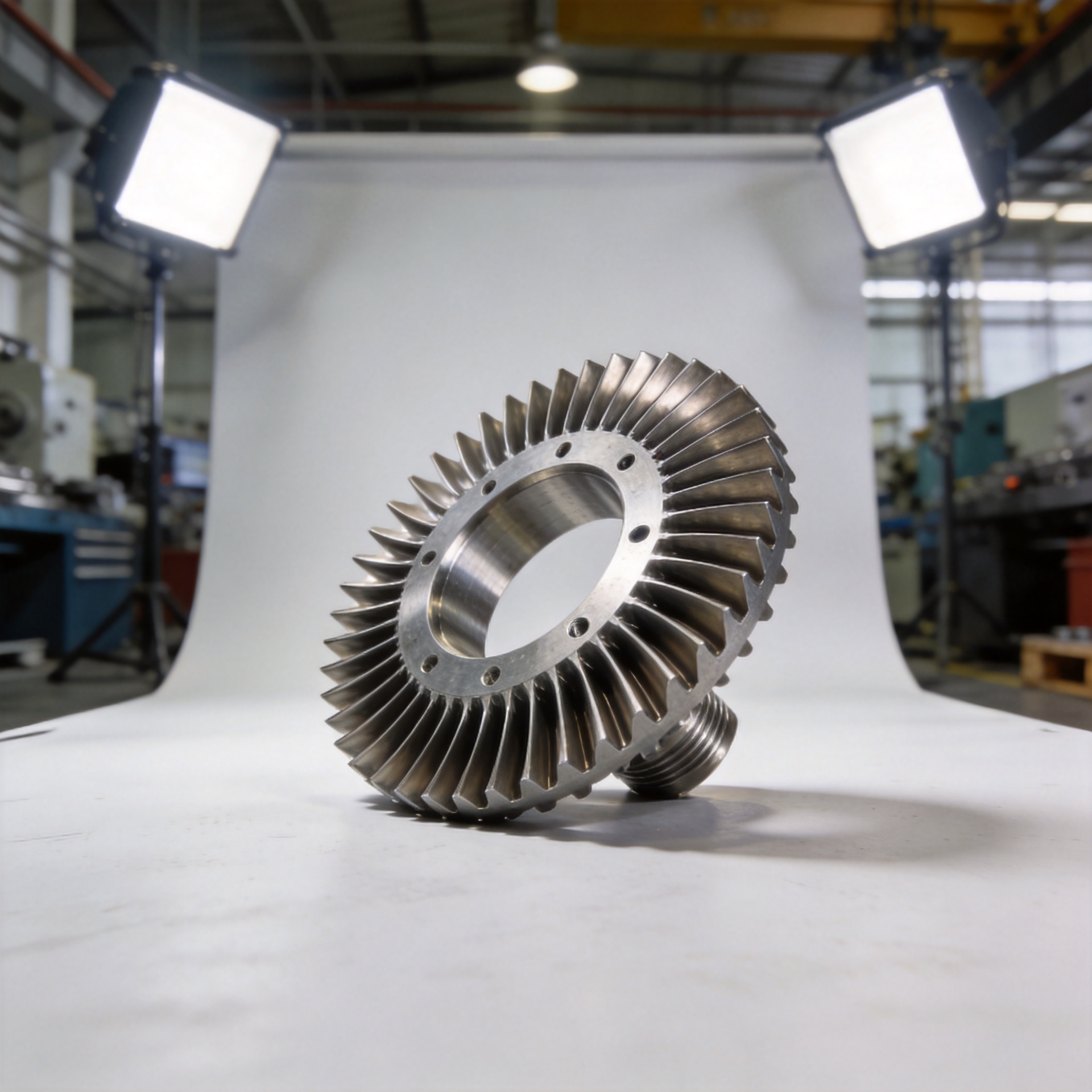
- Precision machining to airfoil tolerances: Custom turbine stator vanes typically require dimensional accuracy in the range of ±0.02–0.03 mm on most functional features, with tighter tolerances achievable on selected high-criticality surfaces. This requires CNC equipment and process knowledge specific to turbine component geometry — not general industrial machining tolerances.
- Material procurement and certification: Engineering drawings will specify alloy grades, often Western designations that require equivalence mapping when sourcing from a manufacturer using Chinese alloy standards. A qualified factory sources and certifies the correct alloy, provides mill certificates, and documents alloy equivalence where required by the customer's specification.
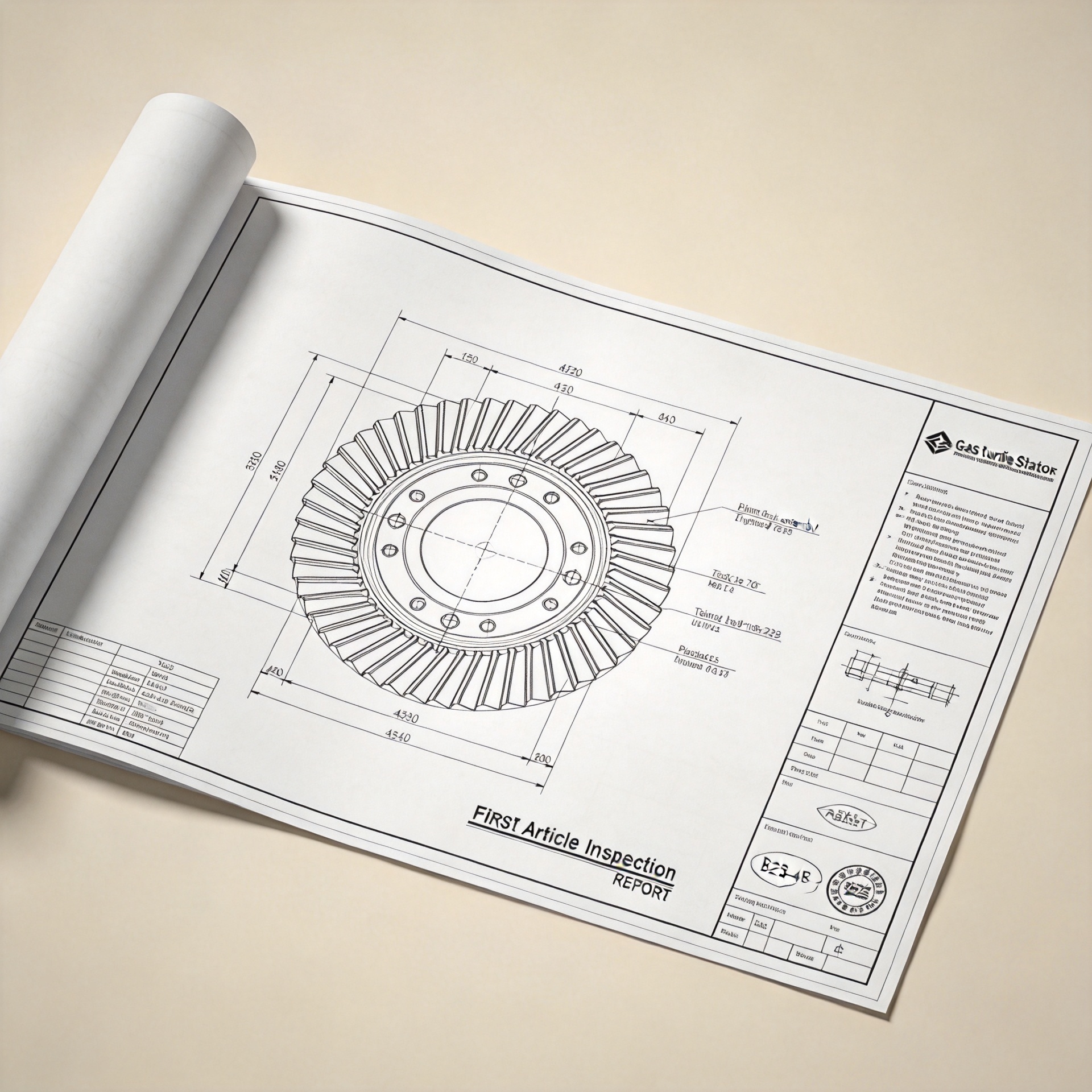
- First-article inspection (FAIR): For custom turbine stator orders, a first-article inspection report confirming dimensional conformance to the engineering drawing before full production run release is the mechanism that validates the drawing customization process. Measurement by CMM or 3D scanning for key vane cross-sections is the accepted method for airfoil profile verification.
- Stator assembly verification: If the order covers a complete stator assembly rather than individual vanes, the factory must be able to verify the assembled configuration: vane-to-vane spacing, angular positioning, and overall ring geometry. Not only individual component dimensions. Stator assembly is a distinct step with its own inspection requirements.
What the Drawing Customization Workflow Looks Like in Practice
From a factory with genuine capability, the drawing customization workflow for turbine stator processing typically moves through these stages:
- Drawing review and pre-production feedback: The factory reviews your engineering drawings, flags ambiguous tolerances, confirms material grade equivalence, and identifies geometry features requiring special tooling. This stage normally generates a few clarification exchanges; that is generally a positive sign, not a cause for concern.
- Tooling and process planning: Custom turbine stator vane profiles require purpose-built tooling. The factory develops the forging or machining process plan aligned to your drawing, including post-process heat treatment if your alloy specification requires specific mechanical properties such as hardness or fatigue resistance.
- First-article production and inspection: Before committing to full production volume, a first-article set is produced, fully dimensionally inspected against your drawing, and a FAIR is issued. This is where drawing-to-part fidelity is confirmed with hard measurement data rather than assumptions. It is also the point where any process adjustments are made before the full run proceeds.
- Full production with batch documentation: Once first-article approval is obtained, the full turbine stator order proceeds with batch dimensional inspection and material certification documentation issued with each shipment.
How to Evaluate a Factory's Drawing Customization Capability
Have you considered whether your evaluation process is actually measuring the right things? Relying on incoming inspection of delivered turbine stator parts to catch drawing non-conformances is reactive and expensive. Evaluating process capability before production starts is far more effective.
When assessing a factory for turbine stator drawing customization work, useful questions include:
- What is your standard turnaround for drawing review and technical feedback before order placement?
- Do you provide first-article inspection reports as standard for custom stator orders?
- What is your measurement methodology for vane airfoil cross-sections — CMM, 3D scanning, or optical?
- How do you handle alloy equivalence documentation for Western-specified grades?
- Can you supply complete stator assembly with assembled-configuration inspection, or only individual vanes?
A factory that answers these questions with specific process descriptions (turnaround times, inspection methods, documentation formats) is demonstrating the kind of drawing customization capability that translates to a correctly built turbine stator on delivery. A factory that responds with generic quality commitments, without process specifics, is a risk worth taking seriously before committing the order.
This holds for most turbine stator custom processing projects — though if your application involves extremely tight airfoil profiles from incomplete legacy drawings, a reverse engineering step may need to precede the drawing customization process. That is worth clarifying with the factory during pre-sales review rather than discovering it mid-production.
Summary: Drawing-Based Custom Turbine Stator Processing Is Achievable with the Right Factory
A qualified factory can complete custom processing of a whole turbine stator according to engineering drawings — covering drawing intake, precision machining to airfoil tolerances, alloy certification, first-article inspection, and stator assembly verification. What separates suppliers who can actually deliver from those who cannot is process capability, visible in engineering review rigor, FAIR documentation, and measurement methodology.
If your project requires custom turbine stator processing from engineering drawings, get in touch with our engineering team to discuss your drawing review requirements and production timeline.