 EN
EN

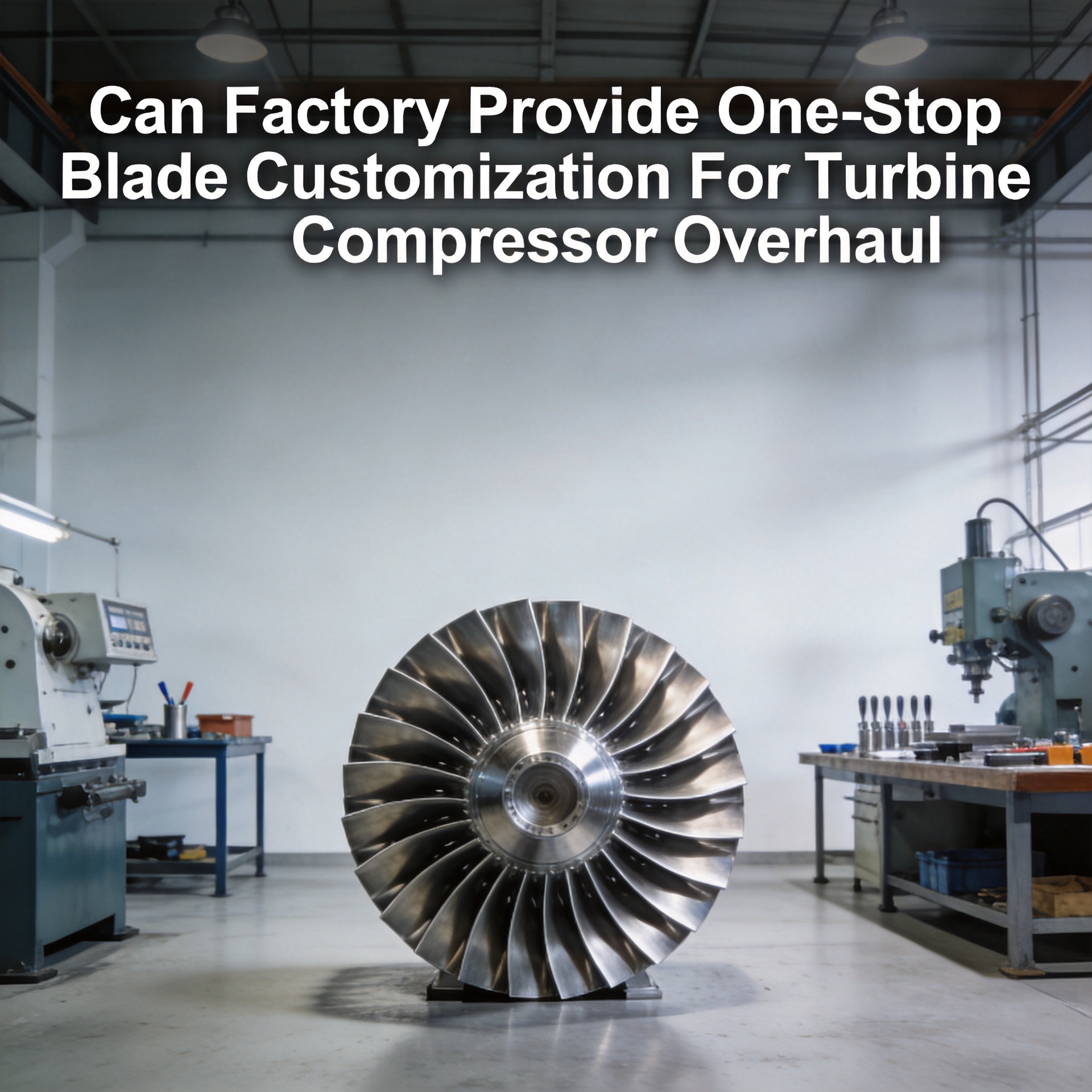
Can Factory Provide One-Stop Blade Customization For Turbine Compressor Overhaul?
When your team is planning a turbine compressor overhaul, the blade procurement question comes up quickly, and the answer is rarely simple. As an MRO service provider, you're already managing tight maintenance windows, multi-stage blade specifications, and customers who can't afford surprises. The appeal of a single factory that handles the entire blade customization scope, from drawing review through to documented delivery, is real. But "one-stop service" means different things depending on who's using the phrase.
The global gas turbine MRO market reached approximately USD 17.59 billion in 2025 and is projected to grow to USD 26.47 billion by 2035 at a CAGR of around 4.17%. That growth reflects a sustained, expanding demand for turbine compressor blade replacement and customization services. At the same time, industrial gas turbines typically require major equipment overhaul at 20,000 to 30,000 operating hours — which means most fleet operators are managing planned procurement cycles, not emergency spot buys. So, practically speaking, what does this mean for an MRO team deciding whether to consolidate blade supply through a single factory source? It means the evaluation questions are different from a standard parts purchase.
What One-Stop Blade Customization Actually Covers
Before deciding whether a factory truly offers one-stop service for turbine compressor blade supply, it helps to define what the scope should include for an overhaul context. The capability set that actually reduces procurement complexity typically spans five areas:
- Profile customization from customer drawings or reference samples — The factory can produce airfoil geometries specific to your turbine compressor stage without requiring you to adapt to a catalog selection.
- Multi-stage supply from a single source — Rather than qualifying a separate supplier for each compressor stage, one factory covers your full blade set across all required stages.
- Material certification documentation as standard — Mill certificates, alloy composition data, and mechanical properties provided with each shipment without requiring special requests.
- Dimensional inspection reporting per delivery batch — Dimensional conformance data shipped with the blades so your incoming inspection workload is reduced.
- Production scheduling aligned with your overhaul window — The factory can take advance orders and commit to delivery timing that matches your maintenance schedule, not just a standard lead time estimate.
A factory that covers all five of these is offering genuine one-stop service for turbine compressor equipment overhaul procurement. A factory that covers two or three is a supplier, not a service partner. Before deciding whether a factory's "one-stop" claim is real, those are the questions worth asking.
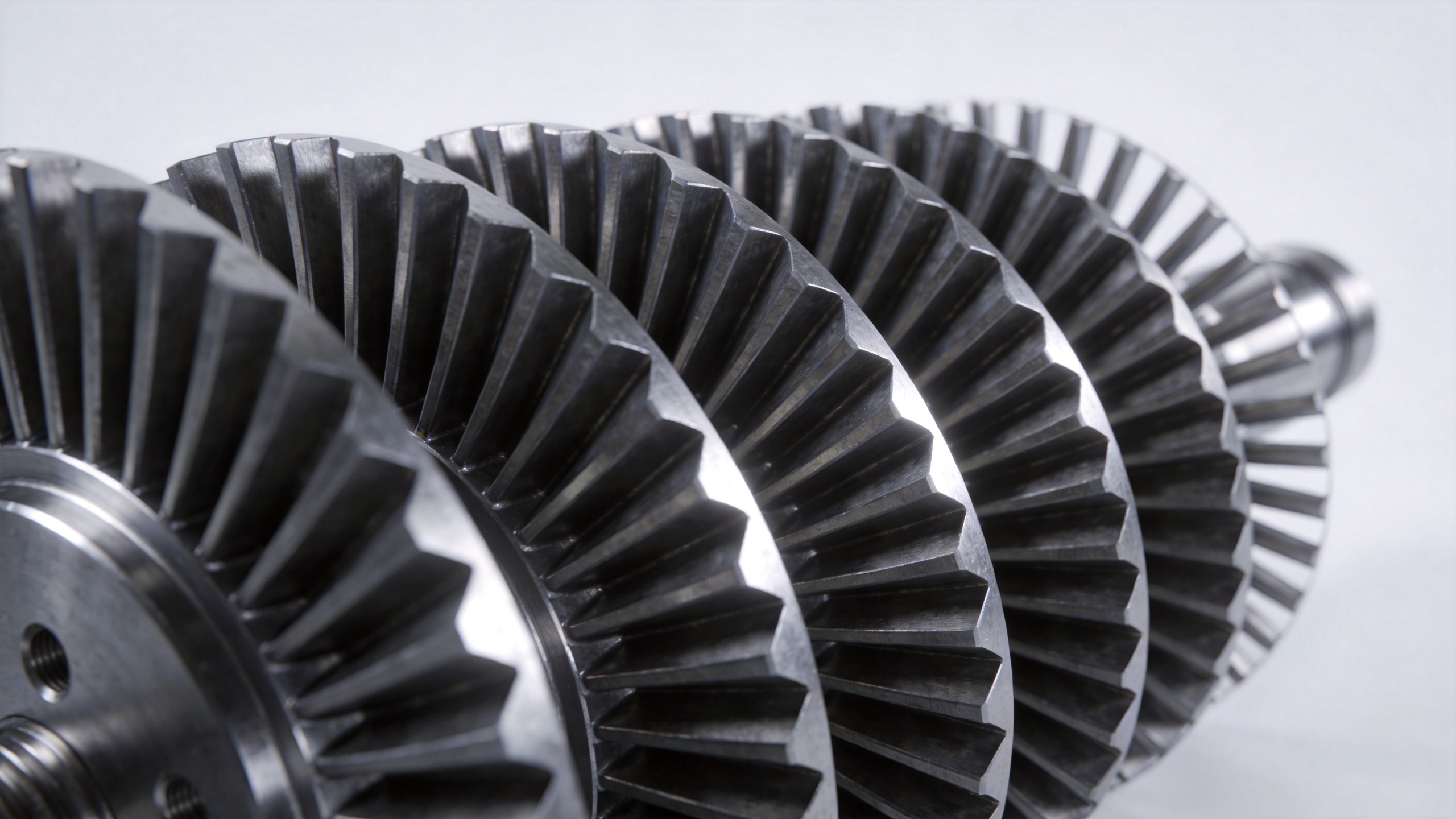
Can a Factory Actually Produce Custom Blade Profiles?
This is where the evaluation gets specific. Producing a custom airfoil profile for a turbine compressor blade requires the factory to work from either a customer-supplied engineering drawing (2D or 3D CAD) or from a reference blade through reverse engineering. Both capabilities are technically demanding.
Material grade matched on paper, but nobody validated the airfoil chord length for the particular turbine compressor stage. That's where profile mismatch typically originates. For MRO applications — especially on legacy turbine compressor models where original documentation may be incomplete — the reverse engineering pathway is often just as important as the drawing-based pathway.
A factory with genuine custom profile capability should be able to:
- Accept both 2D drawings and 3D CAD models as the specification basis
- Perform first-article inspection (FAIR) confirming dimensional conformance to the customer drawing before full production run release
- Offer small-batch prototype production for qualification programs without requiring full-volume commitment upfront
- Provide engineering pre-sales support to validate dimensional and material compatibility before order placement
For turbine compressor overhaul work, the combination of reverse engineering capability and first-article documentation is what converts a custom order from a procurement risk into a repeatable supply program.
Quality Documentation: What Should Ship With Every Batch
The first point of friction we see between MRO teams and blade suppliers is not blade availability — it's documentation turnaround. Material certificates that arrive weeks after the parts, dimensional inspection reports that cover only first-article samples rather than production batches, or heat-batch traceability records that aren't included as standard. These are common enough that they're worth treating as threshold requirements, not bonus features, when evaluating a one-stop service provider for equipment overhaul supply.
The minimum documentation package for turbine compressor blade deliveries in an MRO context should include:
- Material certification with mill certificate, alloy composition, and mechanical property test results
- Heat batch traceability linking each delivered blade to its specific forging production run
- Dimensional inspection report with CMM or 3D scanning results for key airfoil cross-sections
- English-language documentation meeting international buyer requirements
When these documents arrive in English at the time of blade delivery — not as a follow-up request — the incoming inspection and records management workload for your overhaul program drops significantly. For ISO-certified operators, this isn't a preference; it's a procurement requirement that disqualifies suppliers who treat documentation as optional.
Aligning Production With Your Overhaul Window
We used to prioritize lowest price in supplier selection for turbine compressor components. After experiencing a supply disruption during a scheduled overhaul season, the calculus shifted toward delivery reliability — specifically, whether a factory can commit to a production schedule that matches a defined maintenance window, not just provide a generic lead time estimate.
Turbine compressor major overhauls are scheduled events, typically planned months in advance. The blade procurement timeline needs to fit inside that planning cycle. A factory that offers genuine one-stop service for equipment overhaul will have an advance order program that locks in delivery timing based on your overhaul date, not simply queue position.
This also means order status communication at defined production milestones. When your customer's plant is counting on a turbine compressor coming back online at a specific date, the difference between "expected delivery week 12" and confirmed milestone updates at forging, inspection, and dispatch stages is operationally significant. One-stop service should include supply chain visibility, not only product delivery.
How to Evaluate a Factory Before You Commit
Before deciding between a factory that claims one-stop blade customization capability and one that actually delivers it, the evaluation approach matters. Looking back, the time spent on dimensional and material certification review before approving a new blade supplier can feel like a procurement delay. In retrospect, it's what prevents compatibility issues from becoming turbine compressor downtime incidents for your customers.
What worked well in successful blade sourcing for turbine compressor overhaul programs was treating the specification review not as a formality but as a technical dialogue with the forging supplier. That shift surfaced production workability constraints early — and in several cases, changed the final specification in ways that reduced lead time without compromising dimensional conformance.
The evaluation checklist for a one-stop factory candidate should include:
- Can they receive and review your drawings within a defined turnaround period?
- Do they offer a prototype or qualification batch process before volume commitment?
- What is their minimum order quantity for custom profiles — and is it compatible with MRO program quantities?
- Can they provide a sample dimensional inspection report and material certificate format before order placement?
- Do they have multi-stage supply experience, or are they set up only for single-profile catalog orders?
A factory that can answer these questions clearly — and provide supporting documentation — is well-positioned to support turbine compressor equipment overhaul programs, not simply process individual blade orders. The distinction determines whether you're building a supply partnership or managing a repeat qualification cycle.
Making the Decision
The short answer to whether a factory can provide one-stop blade customization for turbine compressor overhaul is: yes, but only if the evaluation covers capability depth, not just price and lead time. The five capability areas — custom profile production, multi-stage supply, complete documentation, aligned scheduling, and pre-sales engineering support — are the filter that separates a genuine one-stop service provider from a supplier making broader claims than their actual scope supports.
For MRO teams managing multiple turbine compressor models and overhaul cycles across a fleet, the long-term value of a single qualified factory source covering all five areas is significant. It reduces qualification overhead on repeat orders, simplifies documentation management, and gives procurement teams a reliable basis for planning turbine compressor equipment overhaul timelines. The blade tip repair service market alone reached USD 1.62 billion in 2024, reflecting how much turbine compressor MRO demand is concentrated in this kind of specialized, customized blade work.
If you're evaluating factory partners for your next turbine compressor overhaul program, the right starting point is a drawing review and a documentation package request — not a price list. Navi Power Technology (compressorblade.com) works from customer engineering drawings, supports multi-stage blade programs, and provides standard documentation packages aligned with industrial MRO procurement requirements. Contact the engineering team to begin a specification review for your program.