 EN
EN

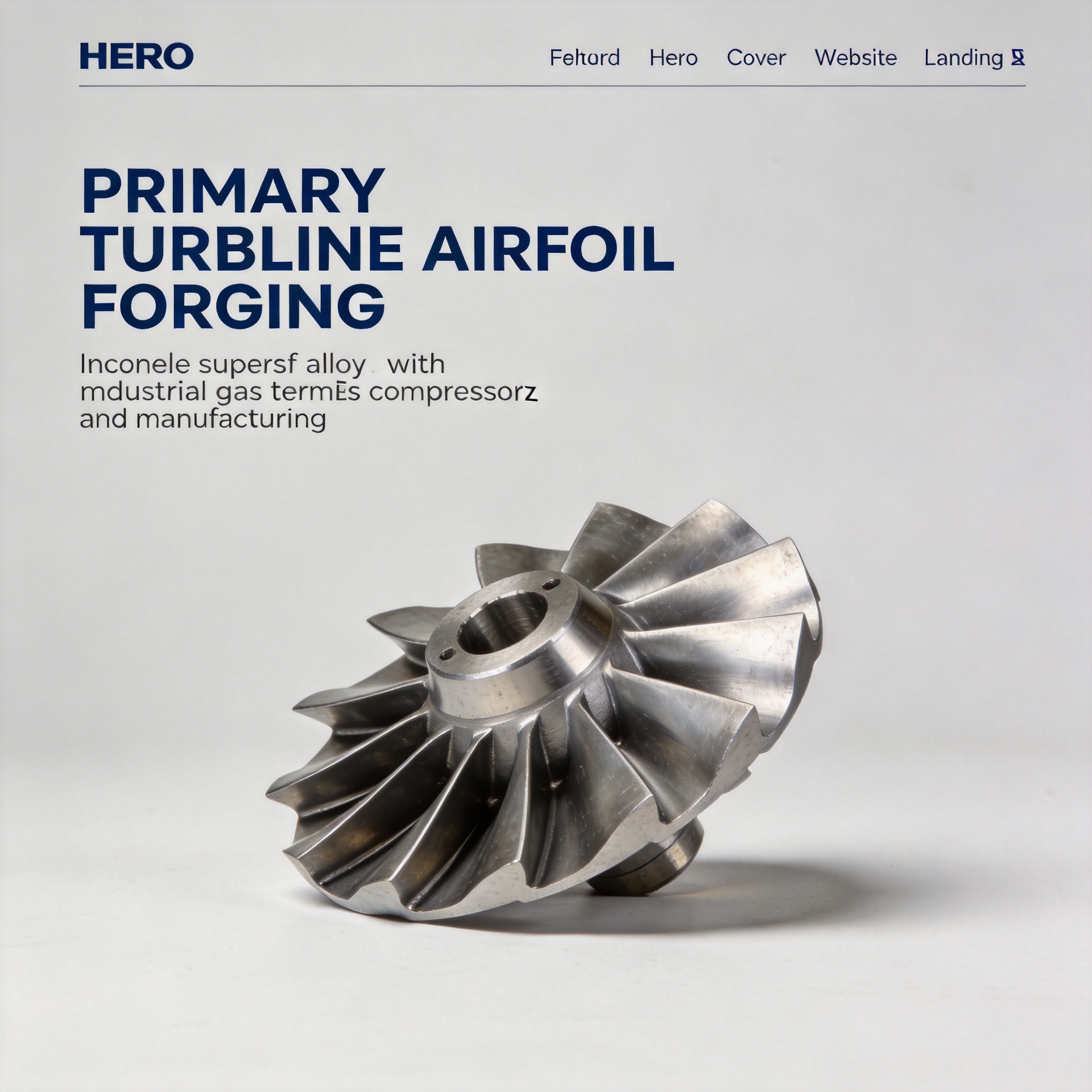
Can Inconel Alloy Be Forged Into Complex turbine airfoil Shapes?
When engineers and procurement teams ask whether Inconel alloy can be forged into complex turbine airfoil shapes, the short answer is yes, but that answer needs context. From a precision forging manufacturer's perspective, the more useful question is: under what conditions does forging remain the right process for complex Inconel airfoil geometries, and where does it reach its practical limits?
Inconel is not a single alloy. The family includes grades such as Inconel 718 and Inconel 625, each with different service temperature capabilities and forging behaviors. For most compressor stage turbine airfoil applications, Inconel 718 is the dominant choice, maintaining useful tensile strength up to approximately 704°C (1300°F). Inconel 625 extends that envelope to around 982°C (1800°F), which pushes the material into territory where forging process design becomes significantly more demanding.
Why Inconel Alloys Are Specified for Turbine Airfoil Applications
The gas path in a gas turbine subjects compressor and turbine blades to a combination of centrifugal loading, thermal cycling, and corrosive combustion gases. These are exactly the conditions that Inconel alloys are engineered to handle. Their nickel-chromium matrix, often reinforced with niobium-based precipitates in the case of Inconel 718, provides creep resistance, fatigue strength, and oxidation resistance that most stainless steels and titanium alloys cannot sustain at the same temperature ranges.
That material advantage comes with a trade-off: Inconel alloys are harder to work than titanium or stainless steel, and inconel forging requires tighter process control than many other aerospace metals. The die wear rate is higher, the forging temperature window is narrower, and grain structure must be carefully managed during heat treatment to achieve the mechanical properties required for turbine airfoil service.
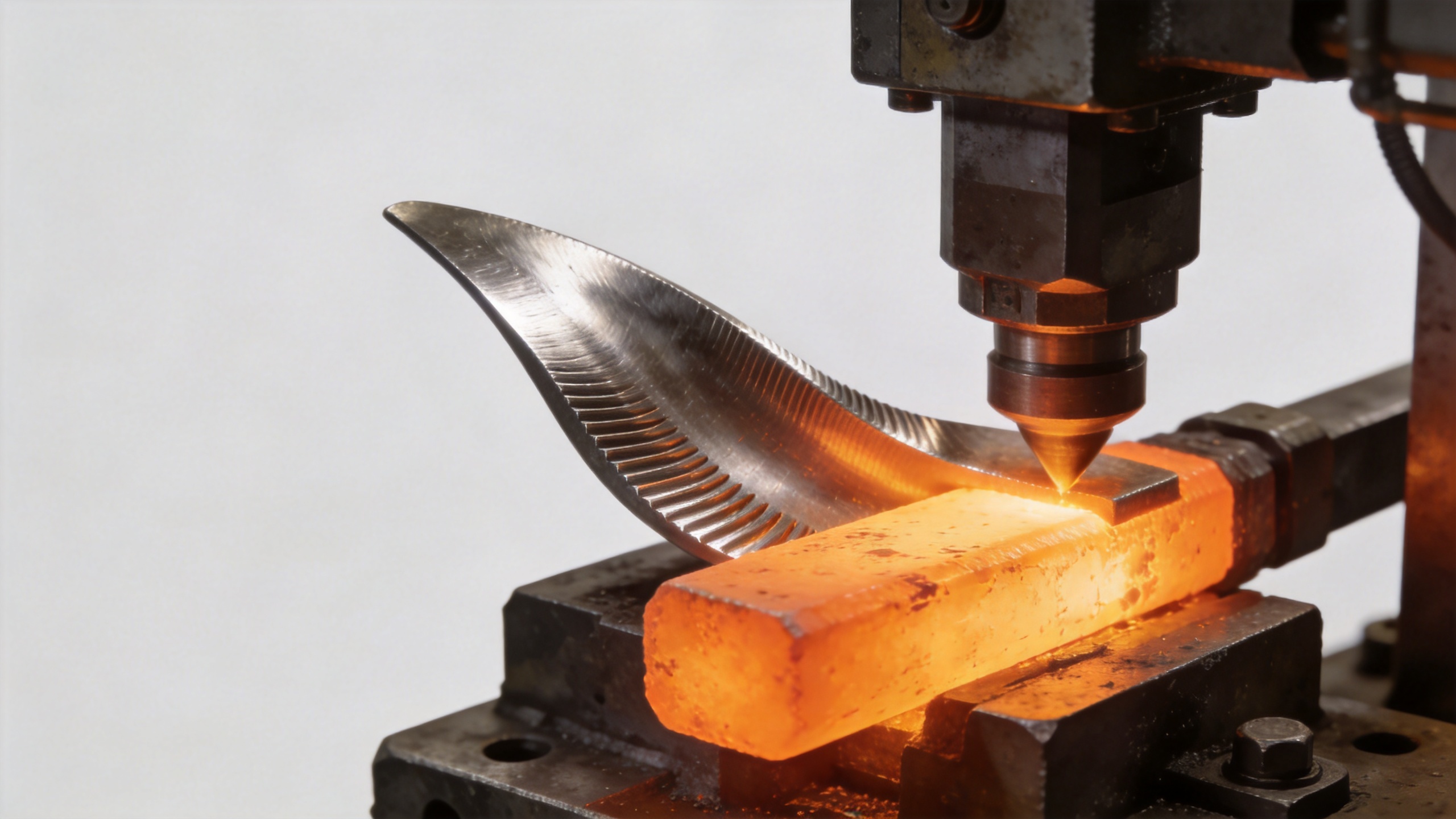
What Does "Complex Shape" Mean in Turbine Airfoil Forging?
A turbine airfoil is not a simple prismatic profile. The aerodynamic section — the leading edge radius, camber line, trailing edge thickness, and chord length, which must conform to tight design tolerances. Beyond the airfoil section itself, most compressor and turbine blades include root features such as fir-tree or dovetail profiles, platform geometries, and in some designs, shroud or tip features.
Complex shape forging for a turbine airfoil means producing all these geometric features (or at minimum, the near-net-shape stock from which they are finish-machined) in a single or multi-stage die set. The complexity is not just the airfoil contour but the three-dimensional twist, taper, and transition from root to tip that characterizes most rotating blade designs.
A tighter airfoil tolerance is generally considered better — or at least, that's the intuitive assumption. In practice, what matters operationally is how close the forged profile is to the design envelope before machining begins. A precision forging held to 0.1–1 mm deviation from the final airfoil form reduces material removal in subsequent CNC machining, which directly lowers total manufacturing cost and reduces geometric error risk from aggressive stock removal.
Forging vs. Casting for Complex Inconel Turbine Airfoil Geometries
This is where many technical discussions get oversimplified. Casting and inconel forging are not interchangeable processes for complex turbine airfoil geometries. Each has a structural advantage envelope.
Forging produces a wrought grain structure with directional mechanical properties aligned with the load path. For compressor blades where fatigue resistance under cyclic loading is the primary failure mode concern, this grain orientation is valuable. Casting, by contrast, can achieve more intricate internal geometries (hollow passages, film cooling holes) that are difficult or impossible to forge, which is why hot section turbine blades operating above 982°C are predominantly cast rather than forged.
For complex shape forging of compressor stage turbine airfoils, which operate at lower temperatures and do not require internal cooling passages, precision forging is technically viable and structurally preferred. The question becomes whether a given supplier's die design capability, forging press capacity, and process control are adequate to achieve the required airfoil geometry within tolerance without post-forge correction.
What Shapes Are Achievable Through Precision Inconel Forging?
From a process capability standpoint, precision die forging can produce turbine airfoil profiles including:
- Full airfoil sections with leading and trailing edge geometry
- Root attachment features (dovetail, fir-tree) with controlled draft angles
- Platform features adjacent to the airfoil section
- Twisted and tapered blade profiles across the span
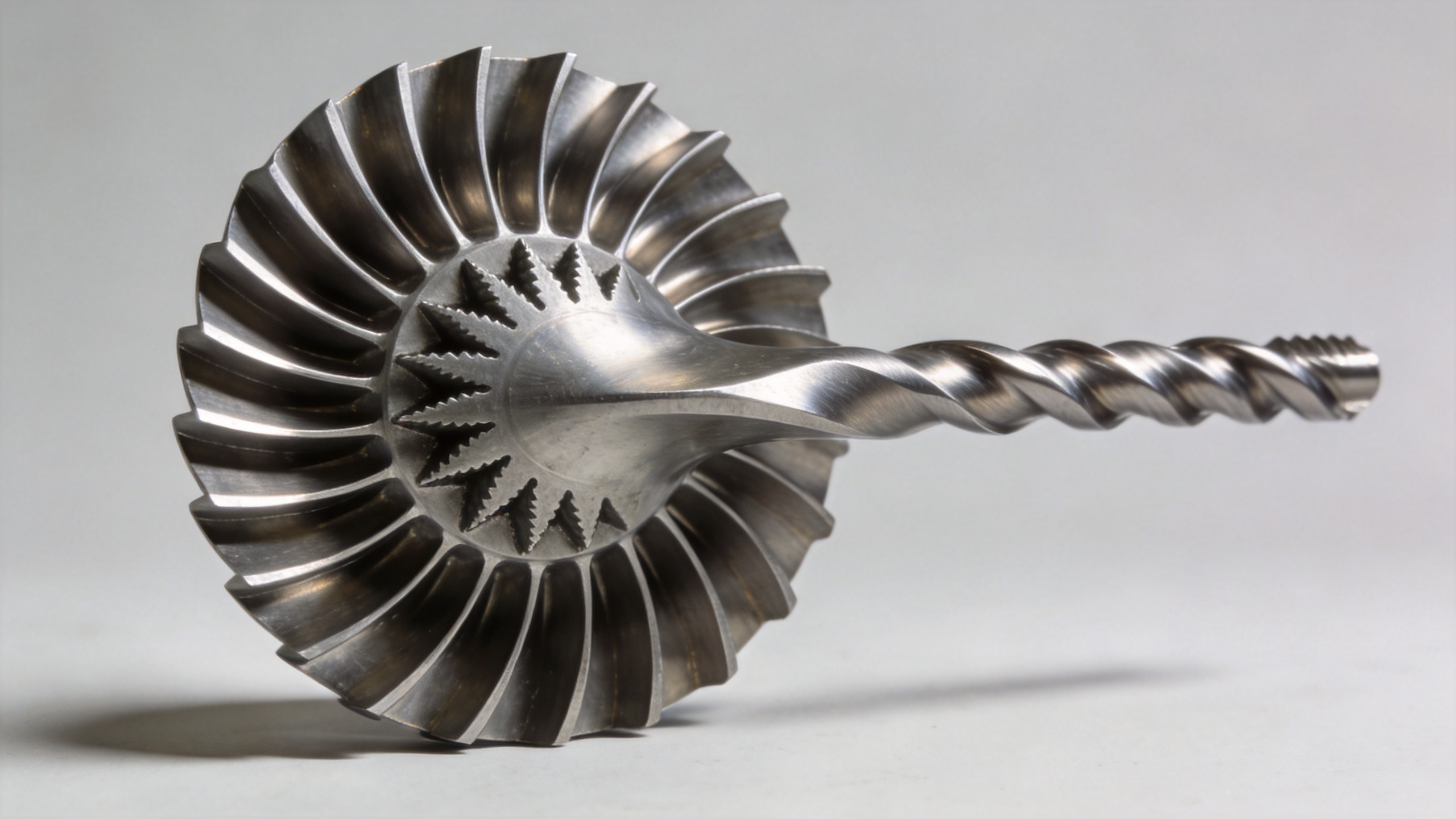
The process control requirement for complex shape forging of Inconel is not trivial. The forging temperature window for Inconel 718, for example, is typically 954°C–1121°C (1750°F–2050°F). Forging outside this window, whether too hot or too cold, affects grain growth and can compromise the mechanical properties achieved during subsequent aging heat treatment.
Where manufacturers have developed low-allowance forging processes, the material stock added to the final airfoil profile can be held to 0.1–1 mm. This compares favorably to conventional forging practice, where allowances of 3–5 mm or more are common. Lower allowance reduces raw material consumption, shortens machining cycle time, and improves dimensional predictability of the finished turbine airfoil.
Evaluating a Precision Forging Supplier for Complex Turbine Airfoil Production
The material grade on a specification sheet — Inconel 718 per AMS 5662, for example, is a necessary starting point, but it tells you little about whether a given supplier can actually produce the complex airfoil geometry you need within tolerance. Relying on incoming inspection to catch dimensional issues is less effective than verifying upfront that the supplier has documented process capability for the profile in question.
Key evaluation criteria for complex shape forging of turbine airfoils include documented dimensional capability (CMM or 3D scanning reports showing airfoil cross-section conformance), die design experience for the specific root geometry, heat treatment control records aligned with the Inconel grade specification, and heat batch traceability for each delivery lot.
For MRO and power generation operators sourcing alternate or replacement turbine airfoils, this means asking for process capability data — not just material certifications — before approving a supplier for complex shape forging requirements.
Summary
Inconel alloys can be precision forged into complex turbine airfoil shapes, with process viability dependent on the alloy grade, operating temperature range, and whether the airfoil design requires internal cooling features. For compressor stage blades and turbine airfoils operating within the service envelope of Inconel 718 or 625 without internal passages, precision inconel forging produces wrought grain structure advantages that casting cannot match.
The practical outcome of a well-executed complex shape forging process is a turbine airfoil blank that requires minimal downstream machining, with traceability and dimensional documentation sufficient for gas turbine qualification requirements.