 EN
EN


How To Ensure Consistency Of Mass Produced Jet Engine Blade?
If you work in turbine MRO or power generation procurement, you already know that sourcing a single jet engine blade is one thing — sourcing two hundred that behave identically is something else entirely. In my experience working with precision forged compressor components, the biggest complaints we hear from operators aren't about the first blade off the line. They're about the fifteenth batch, the emergency re-order, the replacement set that arrives and doesn't quite seat the same way. That's where mass production quality management really gets tested.
This article walks through the practical methods manufacturers and procurement engineers use to ensure performance consistency across mass produced jet engine blade orders — because when it comes to rotating aerospace hardware, variation isn't just a quality issue. It's a safety issue.
Why Consistency Matters in Mass Produced Jet Engine Blades
A jet engine blade — whether in the compressor or turbine section — is not a generic mechanical component. Its aerodynamic profile is precisely calculated to manage airflow, pressure ratios, and heat transfer at specific operating points. Blade profiles, thickness distribution, chord length, and root geometry all have tight tolerances to ensure aerodynamic efficiency and optimal energy conversion. Even small deviations can disrupt airflow patterns, reduce stage efficiency, or create stress concentrations that shorten service life.
For operators running fleets of turbines — whether in combined-cycle power plants or industrial gas turbines — consistency across replacement blade sets directly affects overhaul scheduling, vibration balance during reinstallation, and long-term performance predictability. Modern turbine engines are designed to achieve blade lifespans in the range of tens of thousands of operating hours under demanding thermal and mechanical loads. Sustaining that performance across mass produced jet engine blade batches requires process engineering discipline — intention alone doesn't close the dimensional gap.
Root Causes of Inconsistency in Blade Manufacturing
To solve a consistency problem, it helps to understand where variation actually enters the process. In closed-die hot forging — which is the standard manufacturing method for compressor blades — there are several well-documented sources of dimensional variation:
- Die wear over production runs: Forging dies gradually deform under repeated thermal cycling and mechanical load. Without active monitoring and scheduled die replacement or resizing, blade geometry drifts batch to batch.
- Billet temperature variation: Small differences in billet heating temperature affect material flow behavior during forging. If temperature windows aren't tightly controlled, airfoil cross-section geometry can vary in ways that aren't visible to the naked eye but show up clearly in CMM data.
- Raw material lot-to-lot variation: Even within the same alloy specification, mechanical properties can vary between material heats. Without incoming material traceability, linking a field failure back to a specific production run becomes nearly impossible.
- Post-forging process drift: Heat treatment cycles, surface conditioning, and any finishing operations all have parameters that need to be held stable across production runs. A well-forged blade can still end up out-of-spec if heat treatment wasn't correctly controlled.
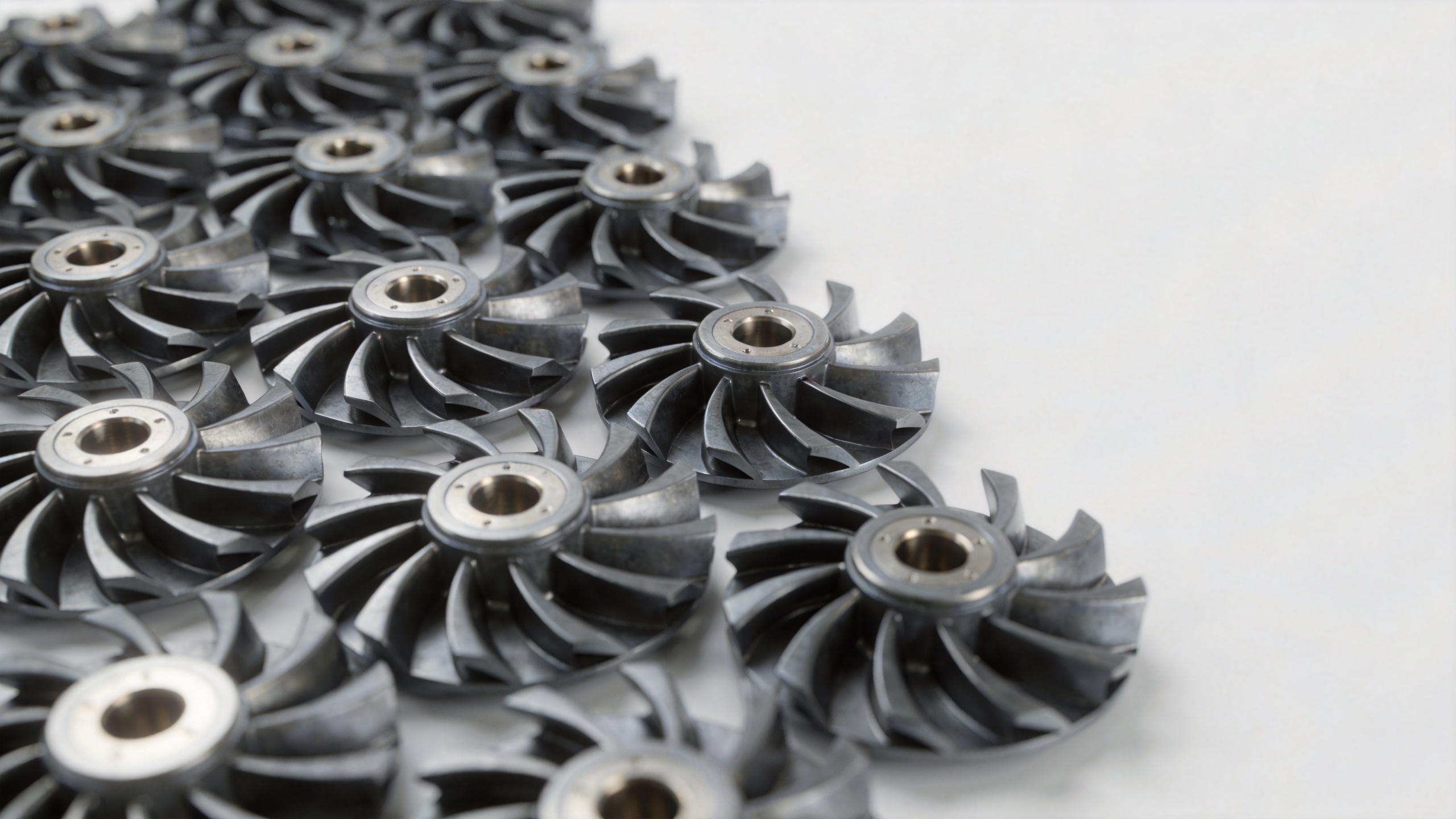
These aren't exotic failure modes — they're the standard challenges any supplier working on high-volume jet engine blade production has to manage. The difference between a consistent supplier and an inconsistent one usually comes down to whether these variables are actively controlled or passively tolerated.
Five Methods to Ensure Consistency of Mass Produced Jet Engine Blades
1. Closed-Die Forging with Low-Allowance Precision Control
The forging process itself is the foundation. Precision forging with tight dimensional control — where airfoil tolerances are held to within a very narrow allowance — reduces the downstream machining work required and limits the opportunity for geometry variation to accumulate. A forging allowance of 0.1 to 1 mm across key airfoil cross-sections is achievable with well-maintained dies and process discipline, and it substantially improves the predictability of final part dimensions compared to conventional high-allowance approaches.
Some manufacturers also use a 1-to-3 mold approach — producing multiple blades per die set — which, when properly implemented, can improve cost-per-part without sacrificing dimensional repeatability, provided the die geometry is verified across all positions.
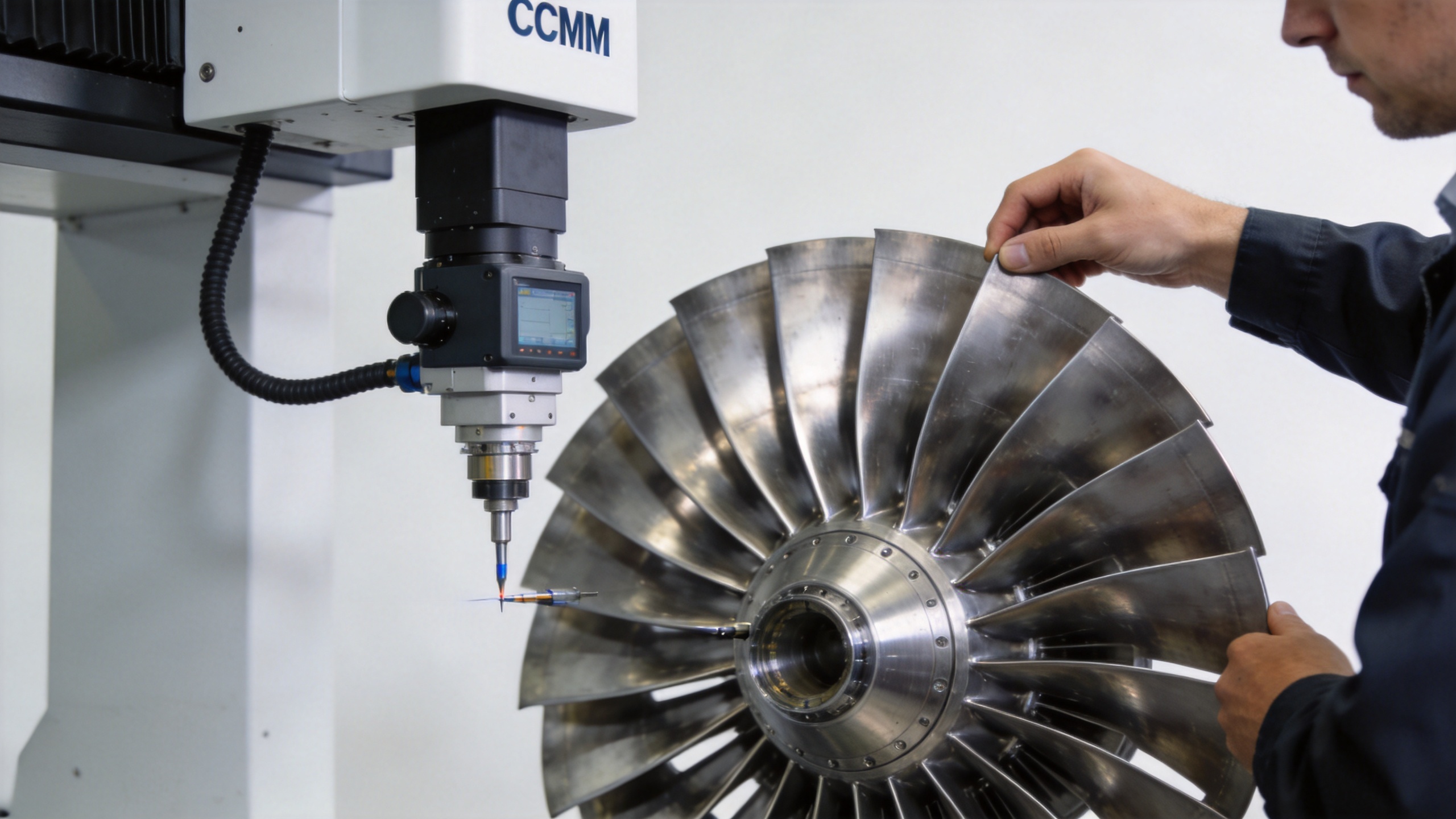
2. Per-Batch Dimensional Inspection Using CMM or 3D Scanning
The inspection protocol matters as much as the manufacturing process. For mass production runs, a representative sample inspection per batch — using coordinate measuring machines (CMM) or structured-light 3D scanning — provides quantitative data on how closely the current batch matches the nominal geometry. This isn't just a pass/fail check; the data should be trended across batches to catch early signs of die wear or process drift before they escalate into rejection events.
For procurement teams, asking your supplier for batch dimensional inspection reports — showing measured values for key cross-sections against drawing tolerances — is one of the most direct ways to verify mass production performance consistency. If a supplier can't provide this documentation, that's worth noting before committing to a volume order.
3. Heat Batch Traceability Linking Each Blade to Its Production Run
Traceability is often undervalued until something goes wrong. When a field issue occurs — unusual wear, unexpected dimensional change after installation, or a vibration anomaly — being able to trace affected blades back to a specific forging production batch and heat treatment lot makes root cause analysis tractable. Without that link, you're trying to diagnose a systemic issue from individual symptoms.
A rigorous traceability system connects each delivered blade to its forging production run records, material heat certification, heat treatment log, and inspection data. For MRO service providers managing aging turbines, this kind of documentation trail is increasingly expected as part of incoming quality management.
4. Material Certification with Every Delivery
Material consistency underpins geometric consistency. Alloy composition affects forgeability, response to heat treatment, and long-term mechanical behavior. A mill certificate — covering alloy composition and key mechanical properties — provided with each delivery batch allows receiving inspection teams to confirm that the material entering their facility matches what was specified, not just what was labeled.
For applications like jet engine blade replacements in power generation turbines, some customers also request third-party material verification on a periodic basis, particularly when sourcing from a new supplier or introducing a new material lot after a supplier change.
5. Process Control Protocols to Minimize Variation Across Production Runs
Ultimately, all of the above measures are supported by the underlying production process discipline. Documented process parameters — forge temperatures, die preheating protocols, heat treatment cycle specifications, surface treatment process windows — should be version-controlled and auditable. Changes to any process parameter should require a formal process change evaluation, not informal adjustment between shifts.
For customers placing repeat orders over time, asking whether a supplier maintains a validated process record for your specific blade design — and whether process changes require customer notification — gives you a clearer picture of what "consistency" actually means at their facility.
What to Ask Your Supplier About Quality Systems
When evaluating a supplier for mass produced jet engine blade procurement, a few direct questions tend to reveal a lot about their actual quality capability:
- Can you provide batch-level dimensional inspection reports with CMM or 3D scan data for key airfoil cross-sections?
- What is your die replacement or refurbishment schedule, and how do you track dimensional drift across production runs?
- Do you provide heat batch traceability linking each delivered blade to its full production and inspection record?
- How do you handle incoming material verification — mill certificate only, or additional incoming inspection?
- What is your process change management protocol? Do customers receive advance notification before process parameters are modified?
These aren't adversarial questions — any supplier with a mature quality system should answer them readily. If the answers are vague or require escalation to get basic documentation, that tells you something meaningful about how mass production performance consistency is actually managed at that facility.
Building a Consistent Supply Relationship
Ensuring consistency in mass produced jet engine blade orders isn't a single technique — it's a system. It starts at the forging process, runs through material traceability and per-batch inspection, and depends on a supplier's willingness to document and share quality data. For procurement engineers and MRO managers, building a clear checklist around these control points before placing volume orders is one of the most practical ways to reduce variation risk over a supply relationship's lifetime.
At Navi Power Technology, our precision forging capability for gas turbine compressor blades is built around exactly these principles — with dimensional inspection reports, heat batch traceability, and material certification as standard deliverables on every order. If you'd like to discuss your specific blade specifications and quality requirements, feel free to reach out at [email protected].