 EN
EN


How To Reduce Maintenance Frequency Of Gas Turbine Compressor With Good Blades?
If you manage or maintain a gas turbine compressor for power generation or industrial use, you already know that maintenance is rarely just a line item — it is a schedule-defining, budget-consuming commitment. Most operators work within inspection windows set around equivalent operating hours: combustion inspections commonly fall near 8,000 EOH, with major overhauls approaching 24,000 EOH or roughly 800 factored starts, whichever comes first. The question that experienced maintenance engineers ask is not whether these intervals exist, but how to reach them without forced outages in between.
The answer, in most cases, starts with the compressor blades themselves. Choosing the right durable blade is one of the most impactful procurement decisions in a gas turbine compressor maintenance program — yet it is often treated as a commodity procurement decision rather than an engineering one.
Why Blade Quality Drives Maintenance Frequency
The compressor section of a gas turbine handles the compression of inlet air before it reaches the combustion chamber. Every blade in the compressor section is under continuous cyclic aerodynamic and mechanical loading. Over time, three degradation mechanisms tend to shorten the effective service life of poor-quality blades and force unplanned maintenance:
- Surface erosion and fouling: Airborne particulates, moisture, and contaminants gradually erode blade leading edges and deposit on blade surfaces. Compressor washing is recommended every 200 to 500 operating hours in typical industrial environments precisely because fouling accumulates and reduces compression efficiency. Blades with rough surface finishes or inadequate anti-erosion treatment accelerate this accumulation rate — pushing washing frequency higher and degrading compression ratio faster between major inspections.
- Dimensional inaccuracy causing efficiency loss: A blade whose airfoil profile deviates from drawing specification — even within what a less precise supplier considers acceptable — shifts tip clearance, changes stage pressure ratio, and reduces aerodynamic efficiency. That efficiency loss accumulates over time. Operators who run performance monitoring programs often see heat rate degradation trending earlier than expected when blades from inconsistent suppliers are used. Earlier efficiency loss means earlier intervention.
- Fatigue cracking from substandard material or process: Gas turbine compressor blades experience high-cycle fatigue from aerodynamic excitation and thermal gradients during start-stop cycles. Cast blades and forgings with inconsistent microstructure are more susceptible to crack initiation. Once a crack is detected, the maintenance window moves up — regardless of where the operating hour clock stands.
The connection between blade quality and maintenance frequency is not theoretical. When the compressor blade is the weak link, you end up inspecting on the blade's schedule rather than the turbine's design schedule.
What Makes a Blade Genuinely Durable
Before deciding that a lower-cost blade delivers equivalent value, it is worth asking: have you actually quantified what dimensional tolerance and material microstructure contribute to service life in your specific operating environment? In my experience working with MRO programs, the answer is usually no — and that gap in understanding is where procurement decisions that look cost-effective on paper turn into maintenance budget overruns over a two- or three-year horizon.
Several blade characteristics have a measurable impact on how long a gas turbine compressor can run between interventions:
Precision Forged Airfoil Geometry
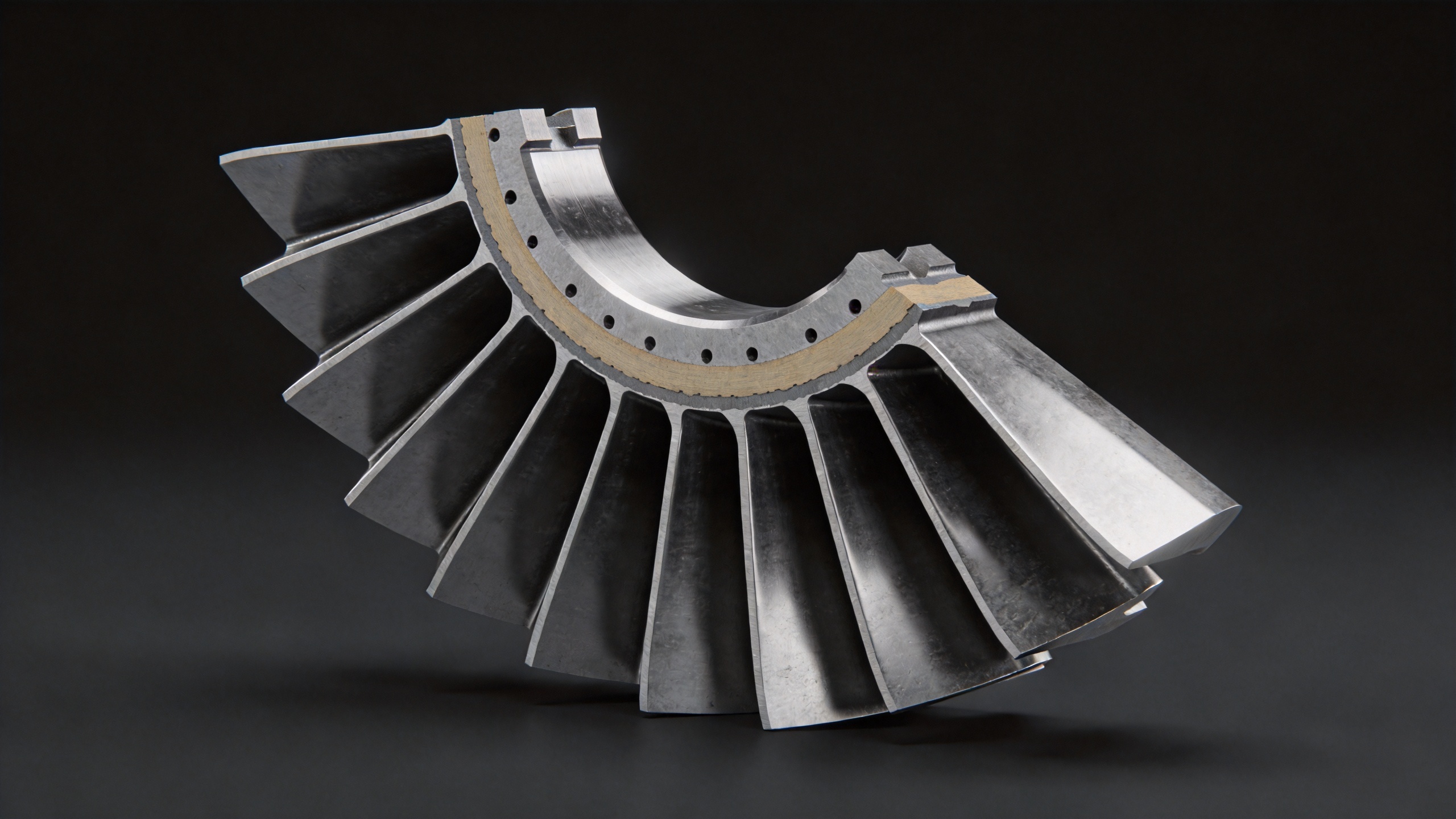
Forged blades dominate compressor applications because forging produces a refined grain structure that resists cyclic fatigue more reliably than casting alternatives. But forging quality varies significantly between suppliers. Precision forging that holds airfoil dimensional tolerances in the 0.1 to 1 mm range maintains designed aerodynamic performance across more operating hours. When blade chord, span, and thickness stay within specification not just on first articles but consistently across production batches, the compressor section performs closer to its designed efficiency for longer — delaying the inspection trigger.
Surface Finish and Anti-Erosion Treatment
Surface roughness on compressor blades influences both fouling accumulation and fatigue crack initiation. Post-forging surface treatment and optional anti-erosion coatings can extend the interval between forced compressor washes and reduce leading edge degradation rates in high-particulate environments. This is not a universal requirement — if your operating environment involves low particulate loads, a coating may not change the maintenance calculus significantly. In high-dust conditions or coastal locations with salt-laden inlet air, coating selection becomes a direct maintenance saving decision.
Material Certification and Batch Traceability
Material grade matters, and so does documentation. Titanium and nickel alloy blades whose mechanical properties are verified through material certification — with heat batch traceability linking each blade to its specific forging run — give operators the forensic capability to investigate premature degradation systematically. Without that documentation, a batch inconsistency problem becomes invisible until blades start failing.
Consistent Production Quality Across Batches
One good delivery does not make a reliable supplier. What matters for a long-term maintenance saving program is blade-to-blade consistency across repeat orders. Batch inconsistency across production runs from the same supplier is one of the most common causes of unpredictable incoming inspection results — and of operators discovering mid-cycle that their blades are not performing as expected. Process-controlled production with documented forging parameters is the technical foundation of repeat order reliability.
The Total Cost of Ownership Perspective
Early on, many procurement teams focus on unit price as the main blade selection criterion. It usually takes a few procurement cycles — and one or two unplanned outages or early inspection events — to recognize that total lifecycle cost is the better performance metric.
Consider a simplified comparison. If a lower-priced gas turbine compressor blade forces one additional unplanned inspection event over a 24,000-hour overhaul cycle, the labor, downtime, and lost generation or process output cost associated with that event typically exceeds the savings from the lower blade unit price — often by a factor of three to five. The compressor blade itself is rarely the most expensive part of the maintenance event it triggers.
The practical implication: a durable blade with verified dimensional accuracy, appropriate material certification, and a surface quality suited to your operating environment is not a premium expense — it is a maintenance interval management tool.
Selecting the Right Blade Supplier for Your Gas Turbine Compressor
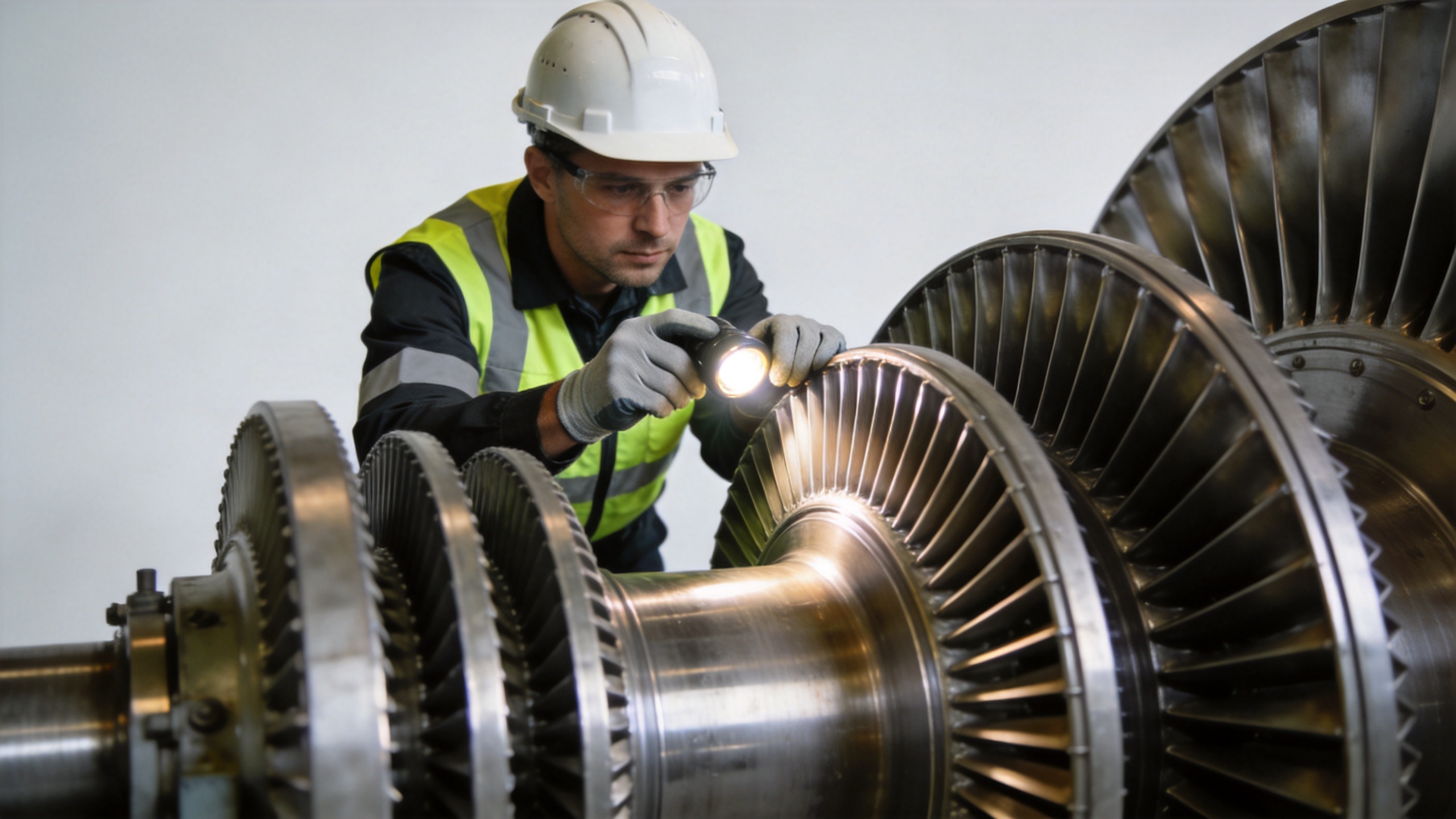
When evaluating blade suppliers for your gas turbine compressor MRO program, consider the following criteria that directly link to maintenance frequency outcomes:
- Dimensional inspection documentation: Does the supplier provide a dimensional inspection report per delivery batch, including measurements for key airfoil cross-sections? This is the minimum evidence that blade geometry is being verified, not just claimed.
- Material certification: Is alloy composition and mechanical property certification provided as standard with each shipment?
- Production consistency evidence: Can the supplier demonstrate that blade dimensions are maintained within specification across repeat orders, not just first-article samples?
- Coating and surface treatment options: Does the supplier offer anti-erosion or corrosion protection coatings for environments where fouling or corrosion is a primary degradation driver?
- Engineering pre-sales support: Is there capability to review your drawing or operating specification before order, to confirm dimensional and material compatibility?
Navi Power Technology specializes in precision forged compressor blades for gas turbines, with a production process built on low-allowance forging (0.1–1 mm dimensional tolerance) and heat batch traceability as standard. Our 1-to-3 mold forging process reduces tooling cost per part and supports competitive pricing for MRO replacement programs — making maintenance saving achievable without compromising the dimensional accuracy that determines how long your gas turbine compressor runs between forced interventions.
If your current blade program is delivering shorter service intervals than the turbine design intends, or if you are seeing more frequent inspection triggers than planned, the blade specification and supplier selection is the first place to look. A more durable blade, consistently produced to the right dimensional tolerances, is often the single most cost-effective maintenance frequency reduction measure available to the maintenance engineer.
Contact Navi Power Technology at [email protected] or visit compressorblade.com to discuss blade specifications for your turbine model and operating environment.