 EN
EN

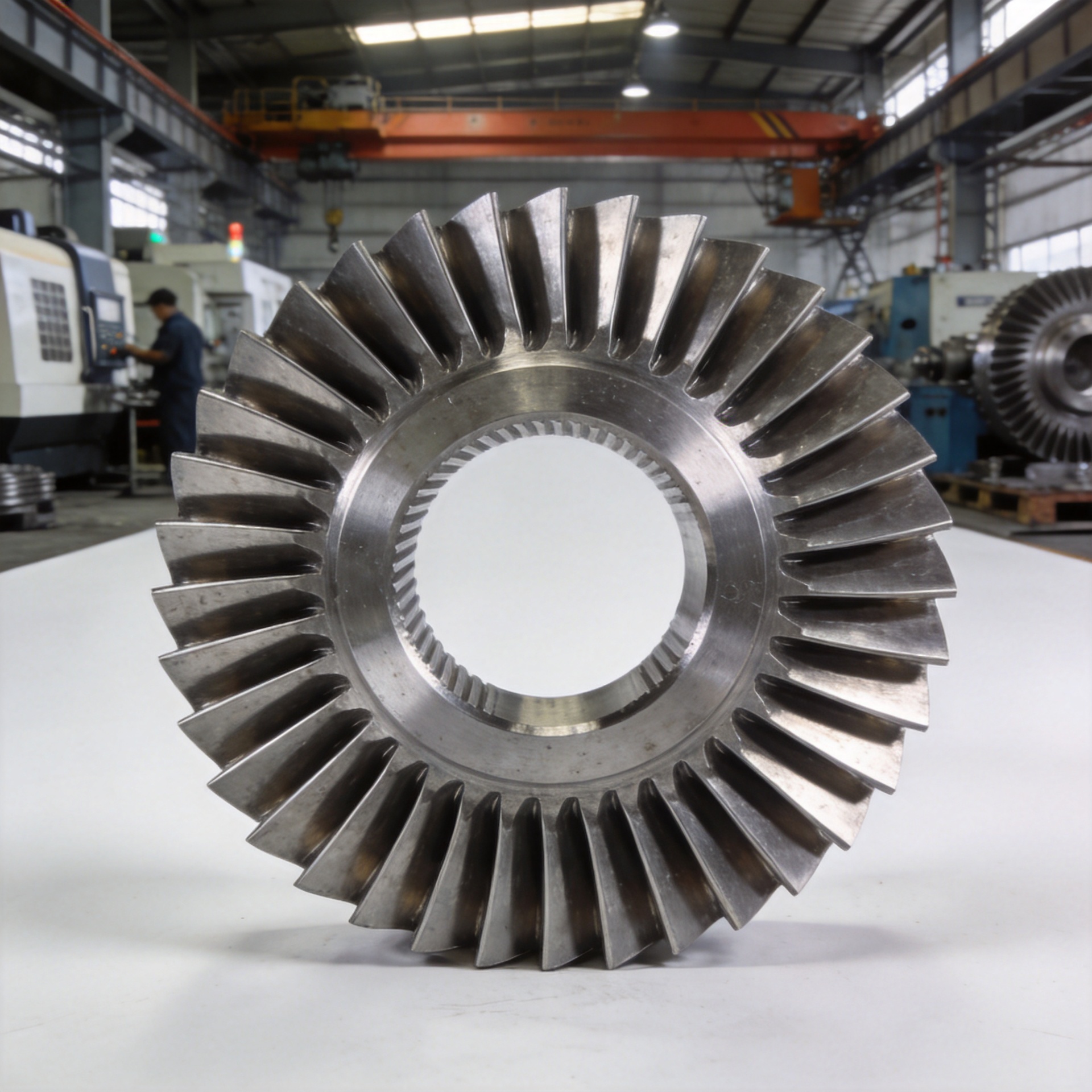
What Advantages Do Chinese Manufacturers Have For gas turbine compressor Parts?
As a precision forging manufacturer specializing in gas turbine compressor components, I've watched international buyers' attitudes toward Chinese supply shift considerably over the past decade. The global compressor blades market was valued at approximately USD 12.5 billion in 2025 and is projected to reach USD 19.8 billion by 2034—a trajectory that reflects both expanding turbine fleets and a growing appetite for cost-competitive sourcing. Within that market, the question isn't simply whether Chinese manufacturers can supply gas turbine compressor parts. So what specific, verifiable advantages do Chinese manufacturers actually offer—and under what conditions do those advantages translate to real procurement value?
You might reasonably argue that OEM-sourced components are the safest choice for warranty-period equipment. That's largely true when warranty preservation is the primary constraint. But for post-warranty fleets, MRO overhaul programs, and operators managing multi-unit portfolios under cost pressure, the calculus looks meaningfully different—and that's where Chinese precision forging manufacturers have built a real case.
Cost Competitiveness Driven by Process Innovation
The cost advantage most often cited for Chinese gas turbine compressor part suppliers is manufacturing efficiency, not labor arbitrage. Advanced facilities in Shandong, Qingdao, and other industrial centers have developed proprietary forging processes that structurally reduce cost per part. One example is the 1-to-3 mold forging approach, where a single die set produces three compressor blades compared to one blade in conventional forging. That process change alone substantially lowers tooling cost per part and improves the economics for replacement programs at MRO scale.
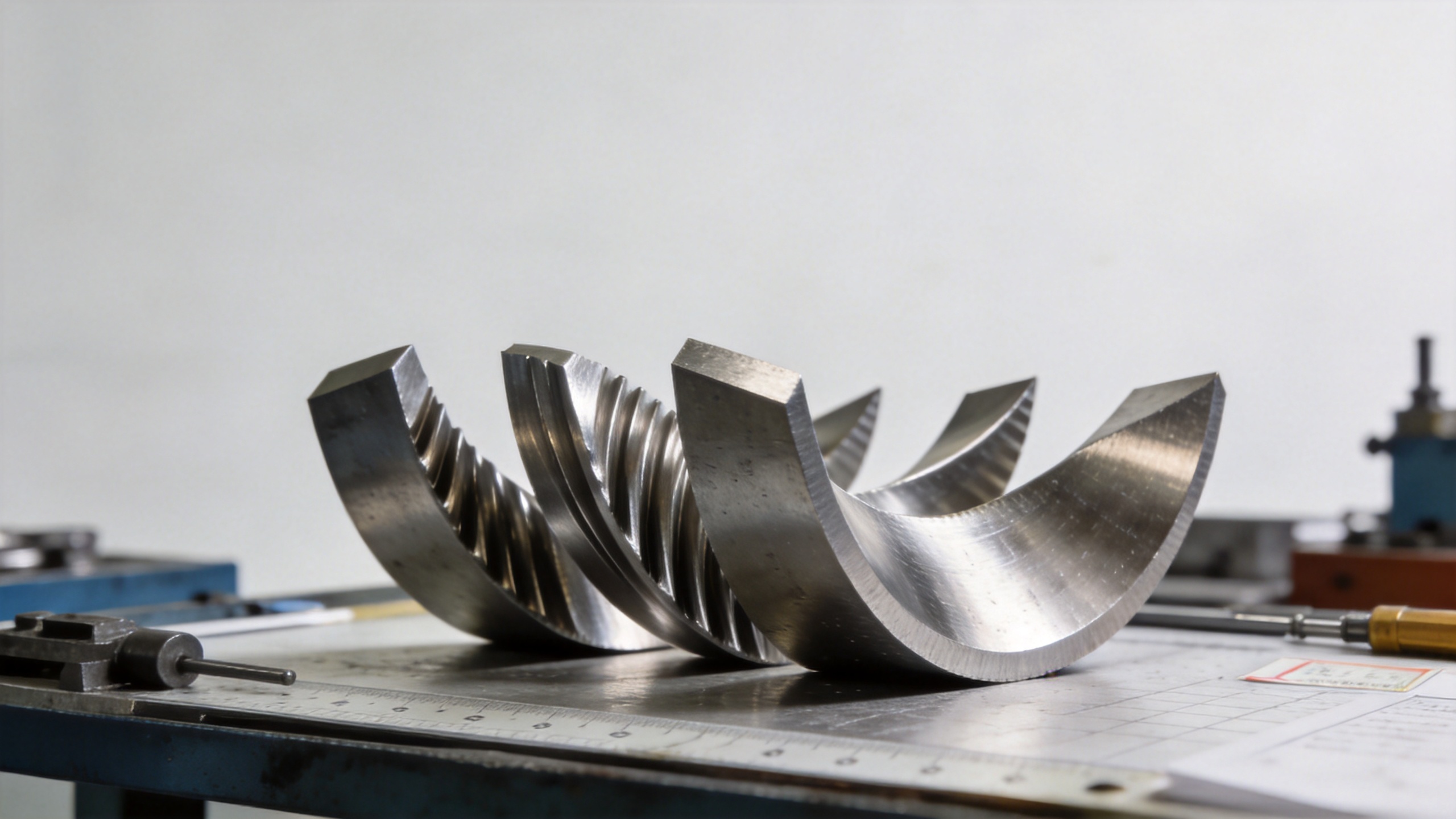
For context: precision-forged titanium compressor blades cost up to 40% more to produce than conventional alternatives due to complex shaping and alloy expenses. Chinese manufacturers who have invested in near-net-shape forging processes can reduce the downstream machining allowance to 0.1–1 mm—compared to significantly wider allowances in older conventional processes—cutting both material waste and finishing cycle time. The result is a unit price that is genuinely lower without requiring a quality trade-off, provided the process capability is real and verifiable.
Early in my own supplier evaluation work, I focused on unit price as the primary selection criterion. It took several procurement cycles to understand that total lifecycle cost—including documentation overhead, incoming inspection costs, and batch consistency—was a more reliable predictor of value. Chinese manufacturers who have invested in transparent quality systems rather than just low price points tend to perform better over the life of an MRO program.
Technical Precision: Forging Capability That Meets Specification
A common concern buyers raise is whether Chinese-manufactured gas turbine compressor parts meet the dimensional specifications required for safe installation and designed aerodynamic performance. This is a legitimate question, and the answer depends entirely on the specific manufacturer and their measurable process capability—not on country of origin.
The most credible Chinese forging suppliers for gas turbine compressor components provide coordinate measuring machine (CMM) or 3D scanning dimensional reports per delivery batch as standard practice. These cover key airfoil cross-sections, leading and trailing edge geometry, root profile, and blade chord and span dimensions. If the inspection reports are per-batch, cover the critical airfoil surfaces, and reference the customer drawing revision, they provide objective evidence of conformance—the same evidence a Western supplier would provide.
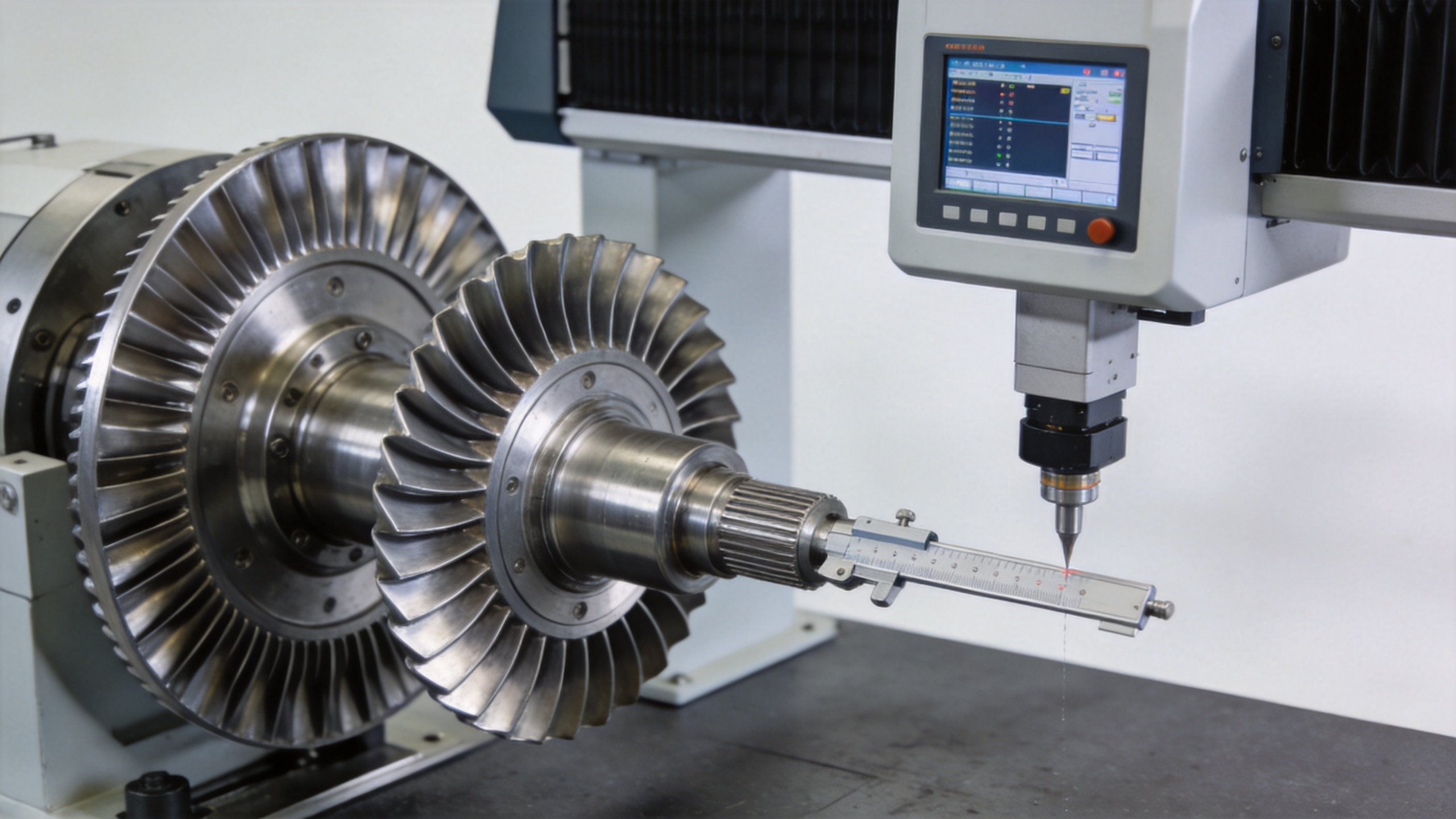
The realization that changed my evaluation approach: matching alloy grade on paper does not automatically translate to equivalent service life in your specific operating environment. What matters more is whether the forging process produces the correct microstructure under controlled heat treatment parameters, and whether the supplier can demonstrate that through material testing documentation with each batch. Reputable Chinese compressor blade forging manufacturers provide mill certificates, alloy composition data, and mechanical property results as standard—not as custom requests.
Supply Chain Access and Lead Time Flexibility
China's industrial supply chain for titanium and nickel alloys—the dominant materials for gas turbine compressor blades—is deep and geographically concentrated in manufacturing hubs like Qingdao, Shandong. That proximity to raw material networks gives Chinese forging manufacturers structural lead time advantages for established blade profiles. For operators managing planned overhaul windows, this means the ability to coordinate delivery to a maintenance schedule rather than waiting on extended procurement queues.
Turbine component supply flexibility is another practical advantage for MRO-oriented buyers. While OEM supply programs are often structured for volume commitments and long lead times, Chinese alternate-source manufacturers typically accommodate smaller trial and qualification quantities. This matters for first-article inspection programs, new turbine model qualifications, and operators who need to manage spare blade inventory without over-committing capital.
If your procurement situation involves a single-source dependency on a Western OEM with constrained availability, qualifying a Chinese alternate source specifically addresses supply continuity risk. This holds for most gas turbine compressor applications in post-warranty operation—though it may not apply if you're still operating under a warranty program where non-OEM components affect coverage terms.
Documentation Standards and English-Language Quality Records
A concern that international buyers frequently raise about sourcing from a china factory is whether the supplier can deliver English-language technical documentation to the standard required by their quality management system. That was a fair criticism of earlier-generation Chinese manufacturing suppliers. It's less true today, though it still separates suppliers meaningfully.
The documentation package that professional Chinese gas turbine compressor part manufacturers provide with each delivery typically includes: material certification (mill certificate, alloy composition, mechanical property results), dimensional inspection report (CMM or 3D scan results per batch), heat batch traceability linking the delivered parts to their forging production run, and—for custom or non-standard profiles—a first-article inspection report. These documents are produced in English and formatted to the standards that ISO-certified operators and MRO service providers require for incoming inspection and maintenance records.
Relying on incoming inspection to catch quality issues is less effective than understanding a supplier's forging process capability—which determines consistency before parts reach you. Buyers who have visited Qingdao-based manufacturing facilities have typically found that the documentation systems, measurement equipment, and process controls are verifiable in person, not just described in a proposal.
Evaluating the Right Fit: What to Look For
Not every Chinese manufacturer offering gas turbine compressor parts has equal capability. The advantages described above are real—but they apply specifically to manufacturers with genuine precision forging infrastructure, traceable quality systems, and established export experience. What separates credible Chinese suppliers from less reliable ones comes down to a few observable practices: batch-level dimensional inspection as standard, per-batch material certificates covering alloy composition and mechanical properties, heat batch traceability, English-language documentation as a default rather than a special request, and willingness to accommodate third-party inspection or witness visits.
The gas turbine parts market—projected to grow from $28.5 billion in 2025 to $42.8 billion by 2034—reflects a global installed base that will require decades of MRO support. As OEM supply programs rationalize their coverage of older turbine models, qualified Chinese alternate-source manufacturers are increasingly the practical supply option for operators managing legacy fleets. The question is not whether to consider Chinese sources, but how to identify and qualify the right one.
If you are evaluating a Chinese precision forging supplier for gas turbine compressor components, the qualification process should focus on process capability evidence, not just pricing. Request a sample dimensional report for a blade profile similar to your requirement. Ask about heat treatment documentation and material testing protocol. Understand how the supplier handles repeat batch consistency and what happens when an incoming inspection identifies a non-conformance. Those conversations will tell you more about turbine component supply reliability than any product catalog.