 EN
EN

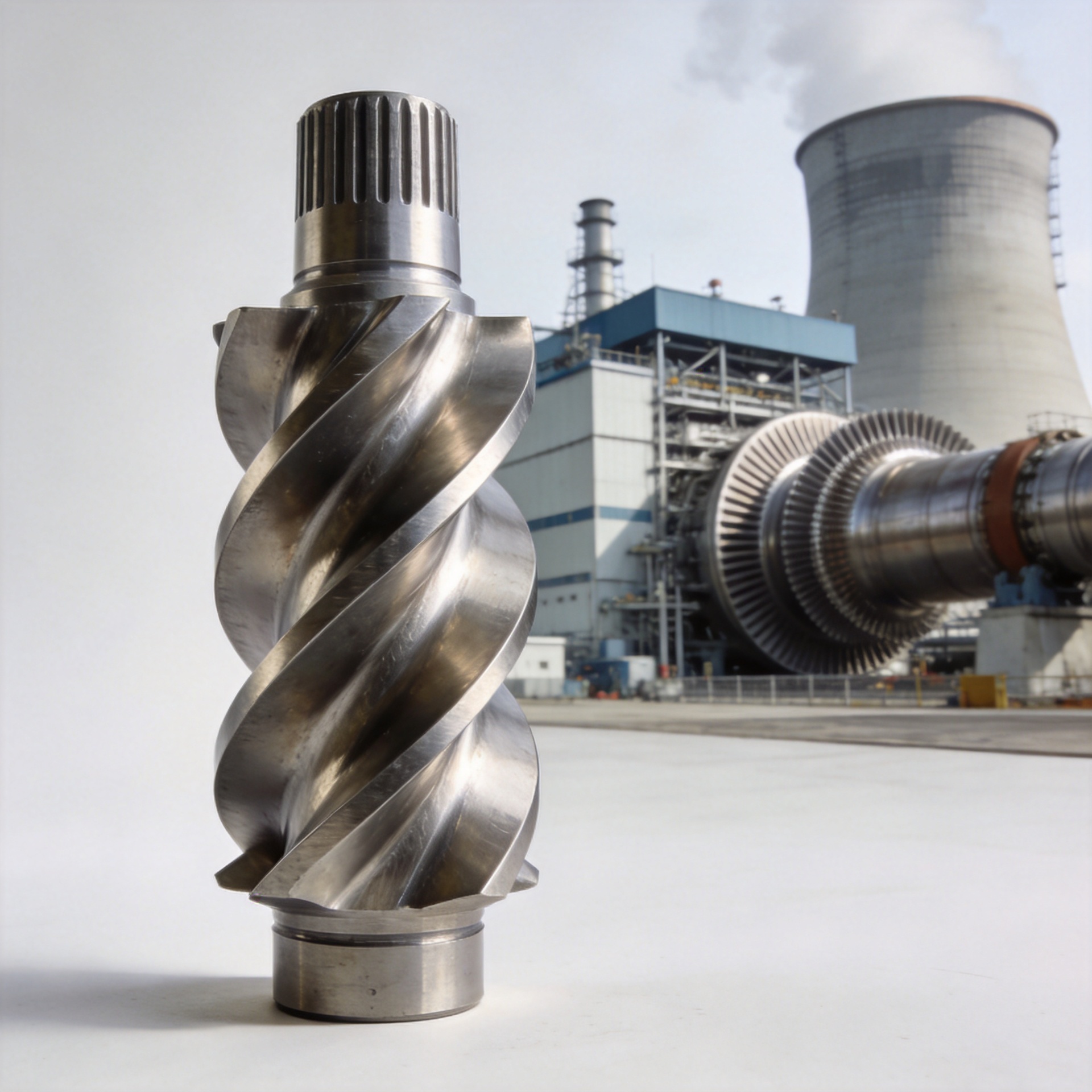
What Forged Blades Are Matched For Heavy-Duty gas turbine compressor?
Selecting the right forged compressor blade for a heavy-duty gas turbine compressor involves more than matching a part number. In heavy-duty industrial units (whether for power generation, combined-cycle plants, or industrial drives) the compressor section runs 15 to 25 stages under progressively increasing pressure and temperature. Each stage has its own aerodynamic demands, structural loads, and material requirements. Getting the blade match wrong means reduced compression efficiency, accelerated wear, or, in the worst case, an unplanned outage that pushes your maintenance window weeks off schedule.
Having worked through blade replacement evaluations on multiple industrial turbine frames, I can tell you that the specification-to-application fit question is where most procurement mistakes are made — not in price negotiation. A blade that looks right on a datasheet may still be the wrong choice if the profile, material grade, or root geometry does not precisely match your specific turbine stage conditions.
Why Heavy-Duty Gas Turbine Compressors Require Stage-Matched Forged Blades
Heavy-duty gas turbine compressors — found in industrial frames such as GE 7F/9F, Siemens SGT-800 series, and comparable platforms — run at high axial flow velocities with stage pressure ratios building progressively from inlet to discharge. The operating environment shifts substantially across the compressor section:
- Front stages: Lower temperature, highest exposure to FOD (foreign object damage) and inlet erosion, wider chord blade profiles
- Mid stages: Rising pressure and temperature, tighter geometric tolerances required for aerodynamic efficiency
- Rear stages: Elevated operating temperatures, higher mechanical stress, shorter chord lengths, more demanding material requirements
Standard-grade or cast compressor blades may satisfy dimensional requirements on paper while failing to deliver the profile accuracy and fatigue life that continuous heavy-duty operation demands. Forged blades — particularly precision-forged compressor blades — provide the microstructural integrity and dimensional consistency these machines require across their full inspection intervals.
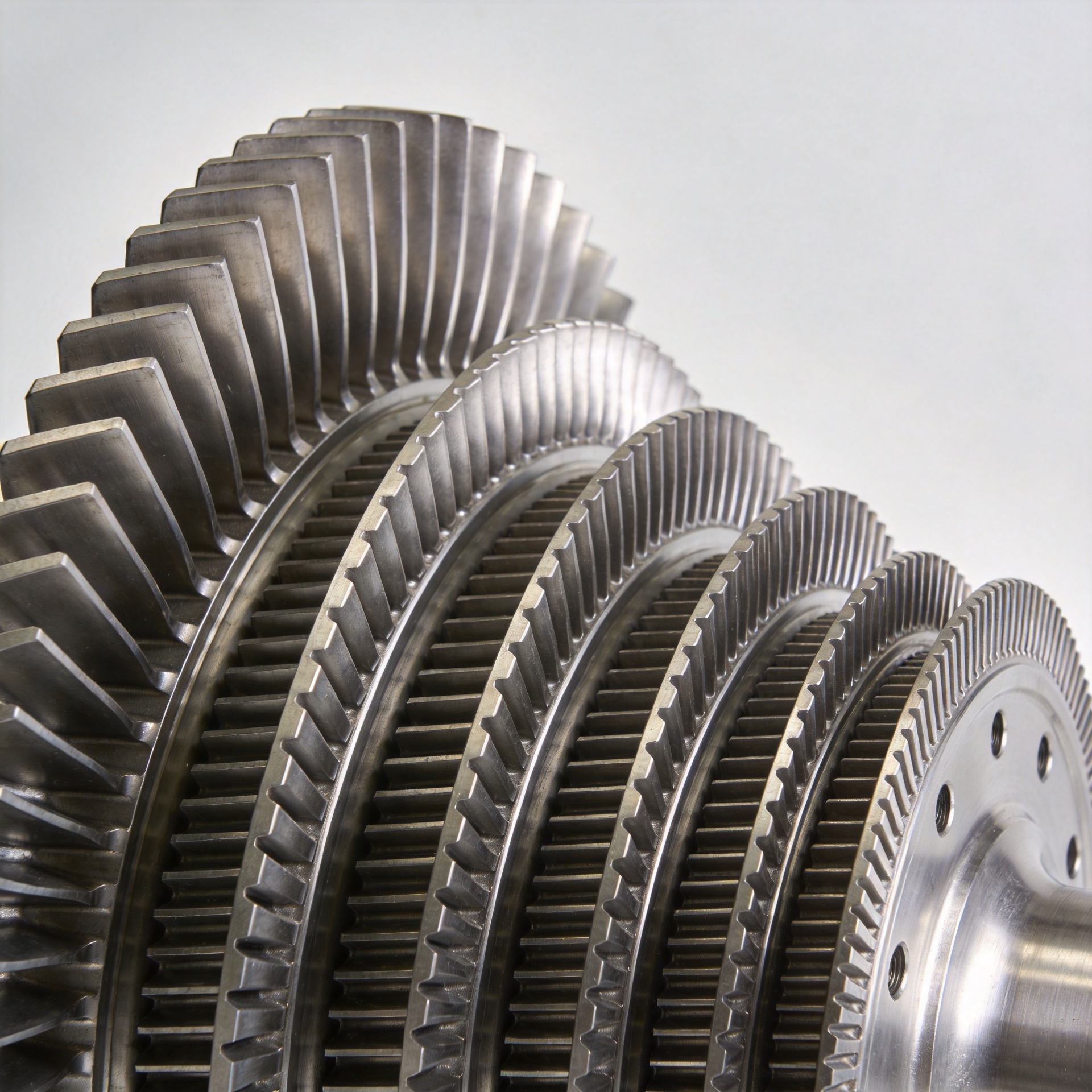
Matching Forged Blades to Compressor Stage Position
Blade matching in a heavy-duty gas turbine compressor comes down to one thing: stage-specific specification alignment. Fleet-wide generalization does not hold.
Front Compressor Stages (Approximately Stages 1–8)
Front stages handle ambient-temperature air at the highest volumetric flow rate. The primary selection criteria for forged blades at this position are:
- Material: Titanium alloys — Ti-6Al-4V or grade equivalents — remain the industry standard for front compressor stages due to high specific strength, good corrosion resistance, and weight efficiency
- Profile: Wide chord, high-aspect-ratio airfoils designed to handle inlet flow conditions and resist leading-edge erosion
- Key concern: FOD toughness and erosion resistance — forged titanium provides notch toughness advantages over cast alternatives that matter most at the front of the compressor where debris ingestion risk is highest
If your heavy-duty turbine unit operates in a high-particulate, coastal, or desert environment, anti-erosion coating on the forged compressor blade becomes part of the specification — not an optional add-on. The material grade selection holds, but the surface treatment requirement changes the supplier qualification conversation.
Mid Compressor Stages (Approximately Stages 9–16)
Mid stages bridge the pressure and temperature transition through the compressor. Forged titanium alloys remain the dominant material choice, but profile precision becomes significantly more critical as blade chord narrows and dimensional tolerance requirements tighten.
A common pitfall here: assuming that a blade meeting dimensional tolerances on your first-article inspection sample will deliver the same dimensional consistency across the full production run. For high-stage heavy-duty turbines, process capability across production batches — not just first-article conformance — is what protects your incoming inspection outcomes. Request batch-level dimensional inspection records from any forged blade supplier you are qualifying for mid-stage positions.
Rear Compressor Stages (Approximately Stages 17 and Beyond)
Rear stages run under significantly elevated temperatures and mechanical stress. This is where material selection shifts away from titanium:
- Material: Nickel-based alloys — grade equivalents to IN-718 or similar designations — that maintain yield strength and creep resistance at elevated operating temperatures where titanium alloys are no longer suitable
- Profile: Shorter chord, high-precision airfoil geometry with tight dimensional tolerances on both the airfoil profile and the root attachment geometry
- Critical match requirement: Stage-specific blade root geometry must correspond precisely to the turbine disk dovetail groove dimensions for your specific frame — a blade that clears airfoil inspection but has root profile deviations will fail installation or introduce rotor imbalance
Rear-stage blade procurement is where the largest proportion of specification mismatches occur in MRO replacement programs. What this means in practice: a blade spec validated on one heavy-duty turbine frame does not transfer to a different OEM frame of nominally similar size. Stage position, disk geometry, and alloy designation must all be matched specifically.
Why Forged Construction Matters in Heavy-Duty Compressor Applications
Industrial gas turbine operators managing heavy-duty units sometimes encounter cast compressor blades in the aftermarket supply chain — offered as lower-cost alternatives. For continuous baseload or combined-cycle operation, the difference in fatigue performance becomes significant over time.
Forged compressor blades develop a refined grain microstructure during the forging process that provides superior fatigue resistance under the cyclic aerodynamic and mechanical loading characteristic of heavy-duty compressor operation. In units with planned inspection intervals of 20,000 equivalent operating hours or longer, blade service life directly influences total maintenance cost per operating hour.
The forging vs. casting decision does not follow a single universal rule — cast blades may be acceptable in specific lower-pressure or partial-load stages for some applications. But the continuous high-cycle, high-load operating profile of most heavy-duty industrial gas turbine compressors consistently favors forged microstructure for fatigue resistance and dimensional stability.
Documentation Requirements When Matching Forged Blades
Selecting the right forged blade for a heavy-duty gas turbine compressor is not only a metallurgical and geometric decision. For operators and MRO service providers, the documentation package is as critical as the blade specification itself.
When evaluating forged compressor blades for heavy-duty applications, verify that your supplier provides:
- Material certification: Alloy composition and mechanical properties linked to the specific heat batch, not just generic grade compliance statements
- Dimensional inspection report: CMM or 3D scanning results across key airfoil cross-sections — not limited to length, width, and root checks
- First-article inspection report (FAIR): Required for any blade you are qualifying on your specific turbine frame for the first time
- Heat batch traceability: Connecting each delivered blade to its forging production run for root cause investigation capability
These are threshold requirements in heavy-duty industrial turbine procurement, not differentiating features. A supplier who cannot provide these documentation elements as standard practice introduces unacceptable risk into your maintenance program.
Navi Power Technology Co. Ltd. supplies precision forged compressor blades for industrial gas turbines, providing material certification, heat batch traceability, and dimensional inspection reports as standard with every delivery. Their patented low-allowance forging process achieves airfoil dimensional tolerances of 0.1–1 mm, with multi-stage supply capability covering a range of heavy-duty turbine applications across Asian, North American, and South American markets. For engineering drawing review or technical specification alignment, contact the Navi Power team at [email protected] or visit compressorblade.com.
Summary: Key Matching Criteria for Heavy-Duty Gas Turbine Compressor Blades
- Match forged blade material to stage position: titanium alloys for front and mid stages, nickel-based alloys for rear high-temperature stages
- Verify production batch dimensional consistency, not only first-article conformance
- Confirm root and airfoil profile geometry against your specific heavy-duty turbine frame — stage position alone is not sufficient
- Require material certification, heat batch traceability, and per-batch dimensional inspection as standard documentation
- For continuous heavy-duty operation, forged compressor blades provide fatigue life and dimensional stability advantages over cast alternatives