 EN
EN

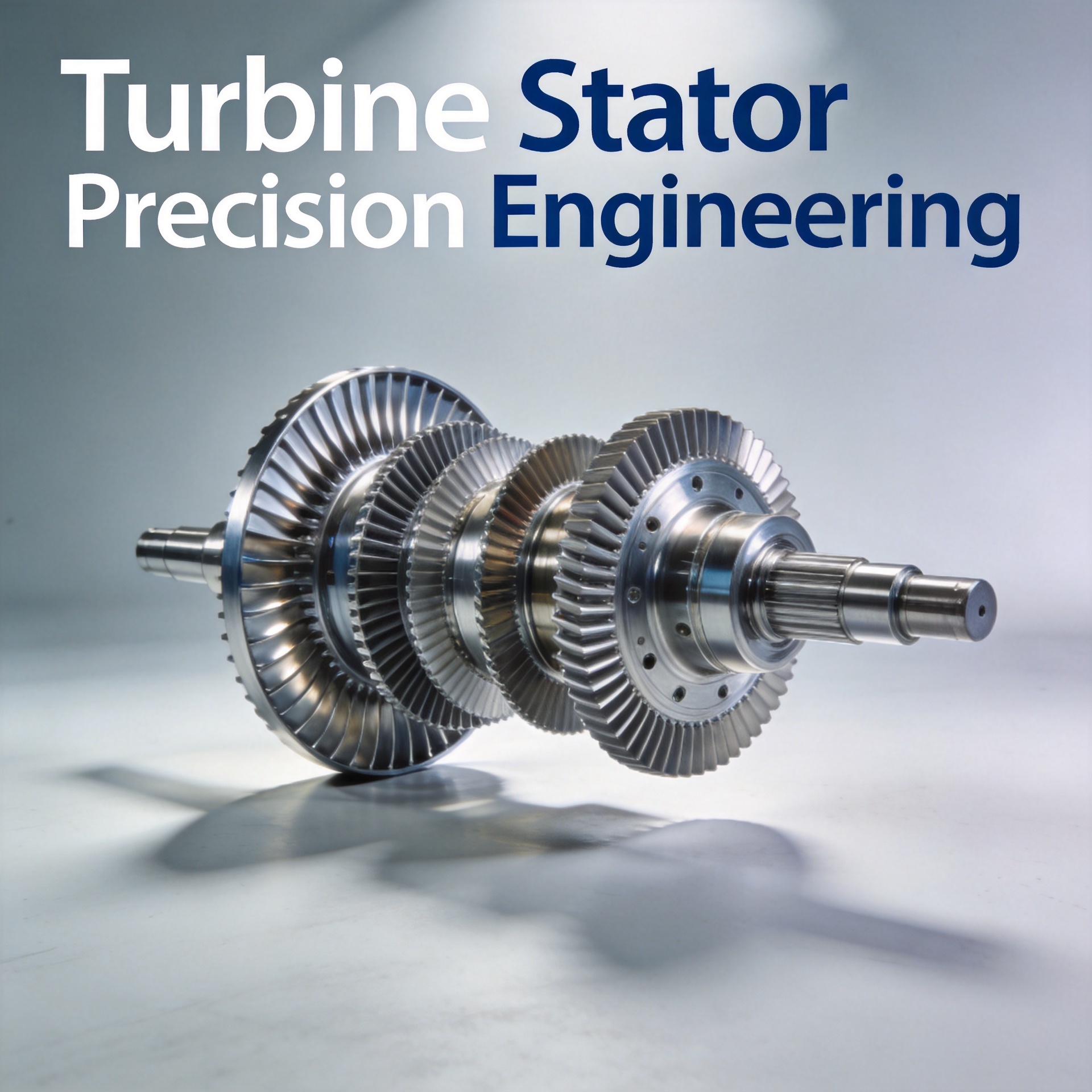
What Forged Components Make Up The Complete Turbine Stator Assembly?
When a turbine stator assembly comes in for overhaul, one of the first things an experienced O&M engineer wants to know is: which specific forged parts need replacement, and are those parts sourced from a manufacturer who understands the tolerance stack in this assembly? It sounds like a straightforward question, and in principle it is, but in practice the answer depends on knowing exactly what a complete turbine stator contains and why each component needs to be a precision turbine forged part rather than a casting or machined plate part.
This guide walks through the primary forged components that make up a complete turbine stator, the material requirements for each, and the manufacturing considerations that matter when sourcing replacements.
What the Turbine Stator Assembly Actually Does
The turbine stator is the stationary structural framework sitting between each row of rotating blades, and sometimes around them. Its job is aerodynamic: fixed vanes redirect and accelerate hot gas or steam flow before it strikes the next rotor stage. Without precise vane profiles, flow angles off-target, efficiency drops, and the downstream rotor sees uneven loading.
Beyond aerodynamics, the turbine stator carries structural loads, manages thermal gradients, and in many industrial gas turbines provides attachment points for variable geometry mechanisms. This combination of demands is why forging is the preferred manufacturing route for most stator hardware: forged microstructure gives better fatigue resistance and tighter dimensional consistency than castings of equivalent material.
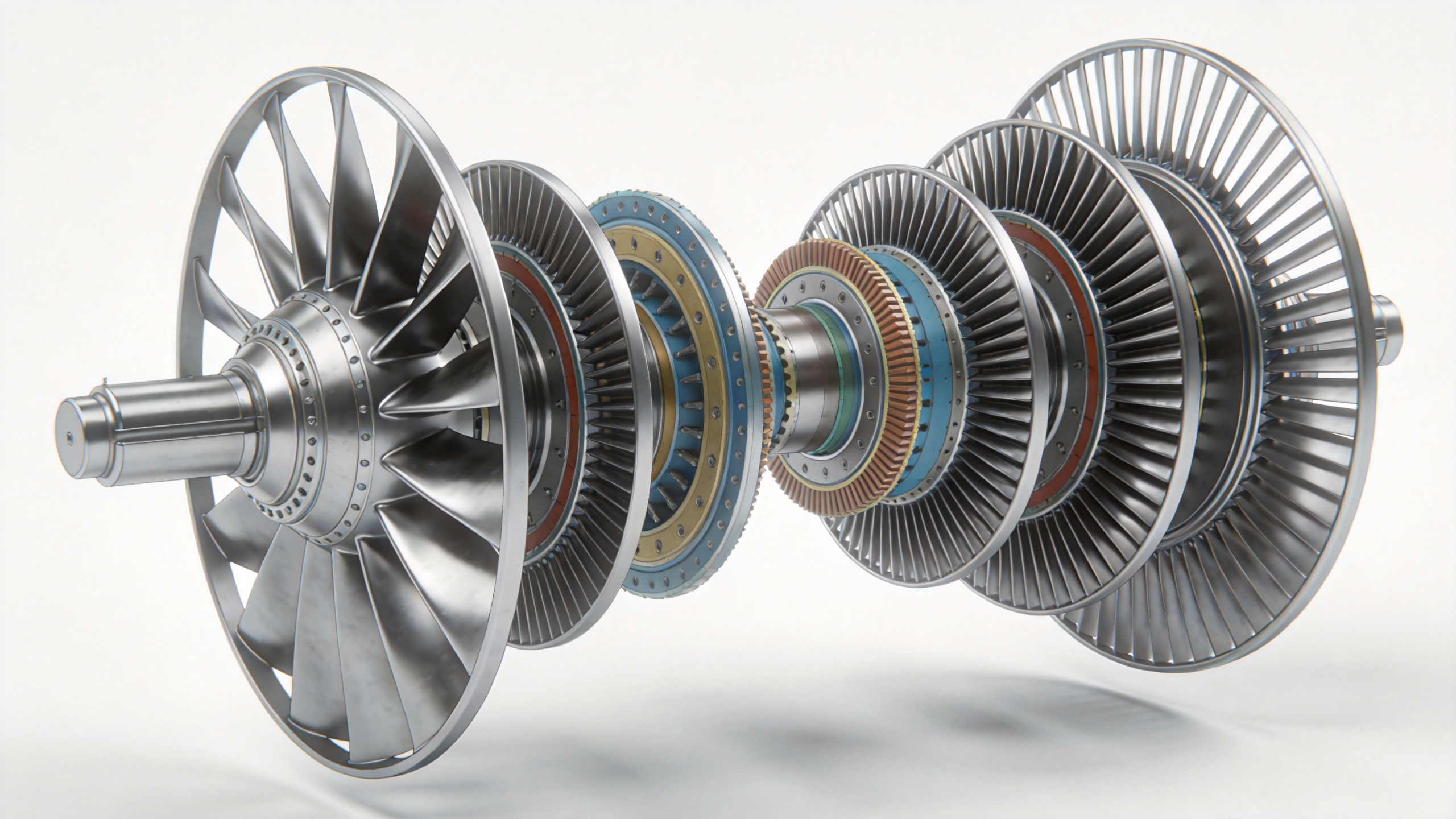
The Primary Forged Components in a Complete Turbine Stator Assembly
1. Stator Vanes (Nozzle Guide Vanes)
The stator vane — sometimes called the nozzle guide vane or NGV in hot-section turbines — is the most visible and most frequently replaced component in the turbine stator assembly. Each stator vane is an airfoil with a precisely defined chord, camber, and twist that determines how gas flow is directed onto the downstream rotor. In compressor stages, these components are referred to as compressor guide vanes or variable guide vanes.
For a stator vane to perform correctly over its service life, the airfoil profile must be held to tight dimensional tolerances, typically within fractions of a millimeter for the leading and trailing edges. Forging achieves this through near-net-shape die work, which minimizes post-forge machining and preserves directional grain flow aligned with the principal stress axis.
Material selection depends on the turbine section. Compressor-stage stator vanes are commonly forged from titanium alloys or martensitic stainless steels. Hot-section nozzle guide vanes, exposed to the highest gas temperatures, require nickel-base superalloys such as Inconel, Nimonic, or Hastelloy grades. When evaluating a replacement turbine forged part for this section, verifying the alloy specification and heat treatment condition against the OEM drawing is non-negotiable.
2. Inner and Outer Shroud Rings
Stator vanes in a turbine stator are typically held at both ends by shroud rings: an outer shroud that connects to the turbine casing and an inner shroud that defines the gas-path inner wall. In many designs these shrouds are integral forgings, with the vane and its shroud platform forged as a single unit. In others, separate inner shroud segments are bolted or welded to the vane roots.
The outer shroud ring also serves a sealing function, maintaining clearance control against the rotating tip seal. Forged shroud rings must maintain their roundness under thermal cycling; a warped shroud causes rubbing, abrasive wear, and efficiency loss. Overhaul engineers often find that shroud distortion, not stator vane erosion, turns out to be the limiting factor in turbine stator service life.
3. Diaphragm Segments
In multi-stage axial turbines, particularly steam turbines, diaphragm segments carry the entire nozzle vane row in a single forged or welded-and-forged structure. Each diaphragm is a curved panel spanning from the inner ring to the outer casing, supporting the stator vane airfoils at both ends.
Diaphragm segments are among the heavier forged components in a turbine stator assembly. They must resist the full pressure differential across the nozzle stage and support the vane row without distortion. Forging them from alloy steel or stainless steel produces the mechanical integrity needed, though it also requires careful die design to maintain the complex compound-curvature profile within drawing tolerances.
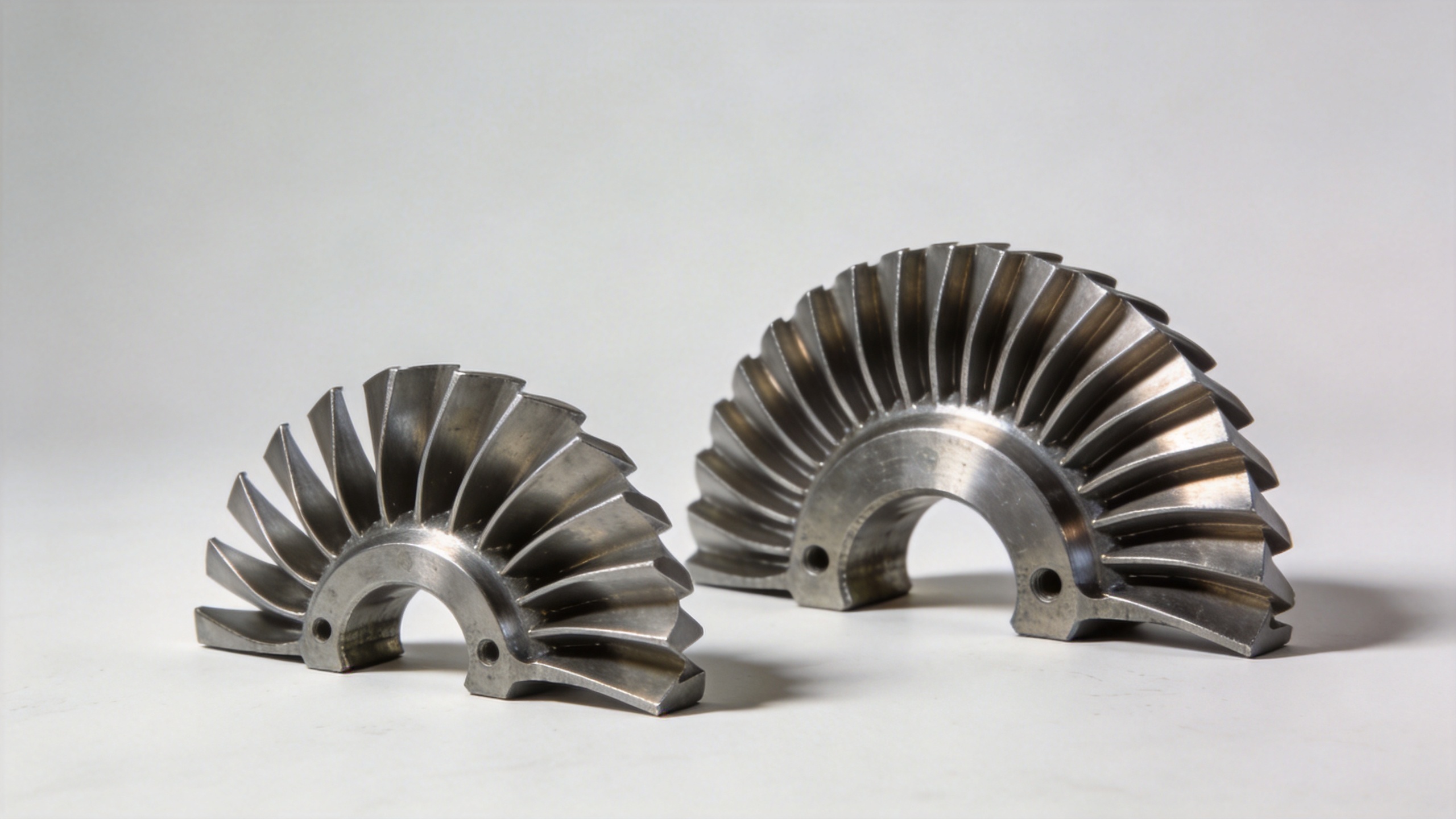
4. Nozzle Ring and Vane Carrier
The nozzle ring — or vane carrier in some design conventions — is the annular forging that acts as the mounting structure for the entire turbine stator vane row. It provides the mating interface to the turbine casing, aligns the vane row concentrically with the rotor, and in variable-geometry compressors carries the pivot bearings for adjustable vanes.
A nozzle ring that is even slightly out-of-round introduces asymmetric loading on the vane row and shifts clearances unevenly around the annulus. This is the stage-compatibility issue engineers sometimes overlook when sourcing a replacement turbine forged part: the forging may meet the material spec and profile dimensions individually, yet still fail the assembly fit-check if the bolt circle or register diameter is outside tolerance. That kind of mismatch in a turbine stator is rarely caught until final assembly at the overhaul facility.
Material Considerations Across the Assembly
A complete turbine stator assembly rarely uses a single alloy family. Outer structural components such as nozzle rings and diaphragm segments are often forged from alloy steel or stainless steel for structural strength and cost-effectiveness. The aerodynamic components, stator vanes and shroud platforms, use higher-performance alloys matched to the temperature regime of each stage.
When specifying replacement turbine forged parts, the question is not just "what alloy?" but "what alloy condition?" Post-forge heat treatment controls the microstructure, and therefore the fatigue and creep properties, of each finished component. A forging that passed incoming dimensional inspection but came from a supplier without controlled heat treatment documentation is a recognized risk in high-cycle stator applications.
For standard alloy grades (titanium 6Al-4V, 316 stainless, IN718), material certification from the forge, including mill certificate, heat batch traceability, and a dimensional inspection report, provides the documentation trail that MRO procurement and quality teams need. Where specialty coatings are considered as an alternative to a higher-spec base alloy for stator vanes, the trade-off is not straightforward: a coating adds protection but also adds process steps, adhesion risks, and inspection complexity that a proven alloy upgrade may sidestep.
Practical Sourcing Notes for Turbine Stator MRO
What does this mean when sourcing replacement forged components for a turbine stator overhaul? A few factors are worth evaluating before committing to a supplier:
- Profile accuracy: The stator vane airfoil must be produced from the correct drawing revision. Confirm the supplier works from customer-supplied engineering drawings or certified equivalents, not approximated profiles.
- Root geometry compatibility: The vane root that mates with the inner shroud or diaphragm slot is a precision fit. A turbine forged part with correct airfoil dimensions but incorrect root geometry causes assembly problems that aren't caught until the hardware is installed.
- Heat batch traceability: Full traceability from raw material to finished forging links each delivered stator component to its alloy melt and heat treatment records, important for quality review and incident investigation.
- NDT capability: Ultrasonic or fluorescent penetrant testing catches internal and surface defects that visual and dimensional checks miss. For hot-section and high-cycle compressor parts, NDT should be standard rather than optional.
Precision forging manufacturers who specialize in turbine stator and compressor components, rather than general-purpose forging shops, typically carry the process documentation and measurement capability to support these requirements. For MRO organizations sourcing from Asia, manufacturers with established export records to North American and Asian power sector customers offer a viable supply alternative, particularly where lead time flexibility and cost competitiveness matter.
Conclusion
A complete turbine stator assembly brings together several distinct forged components: stator vanes, inner and outer shroud rings, diaphragm segments, and the nozzle ring or vane carrier. Each has its own geometry, material, and process requirements. Knowing which component needs to be replaced, and what that replacement requires from a turbine forged part supplier, is the starting point for every effective stator overhaul.
For procurement and engineering teams evaluating forged stator component supply, verifying alloy traceability, dimensional inspection capability, and root geometry compatibility before placing the first order is time well spent.