 EN
EN

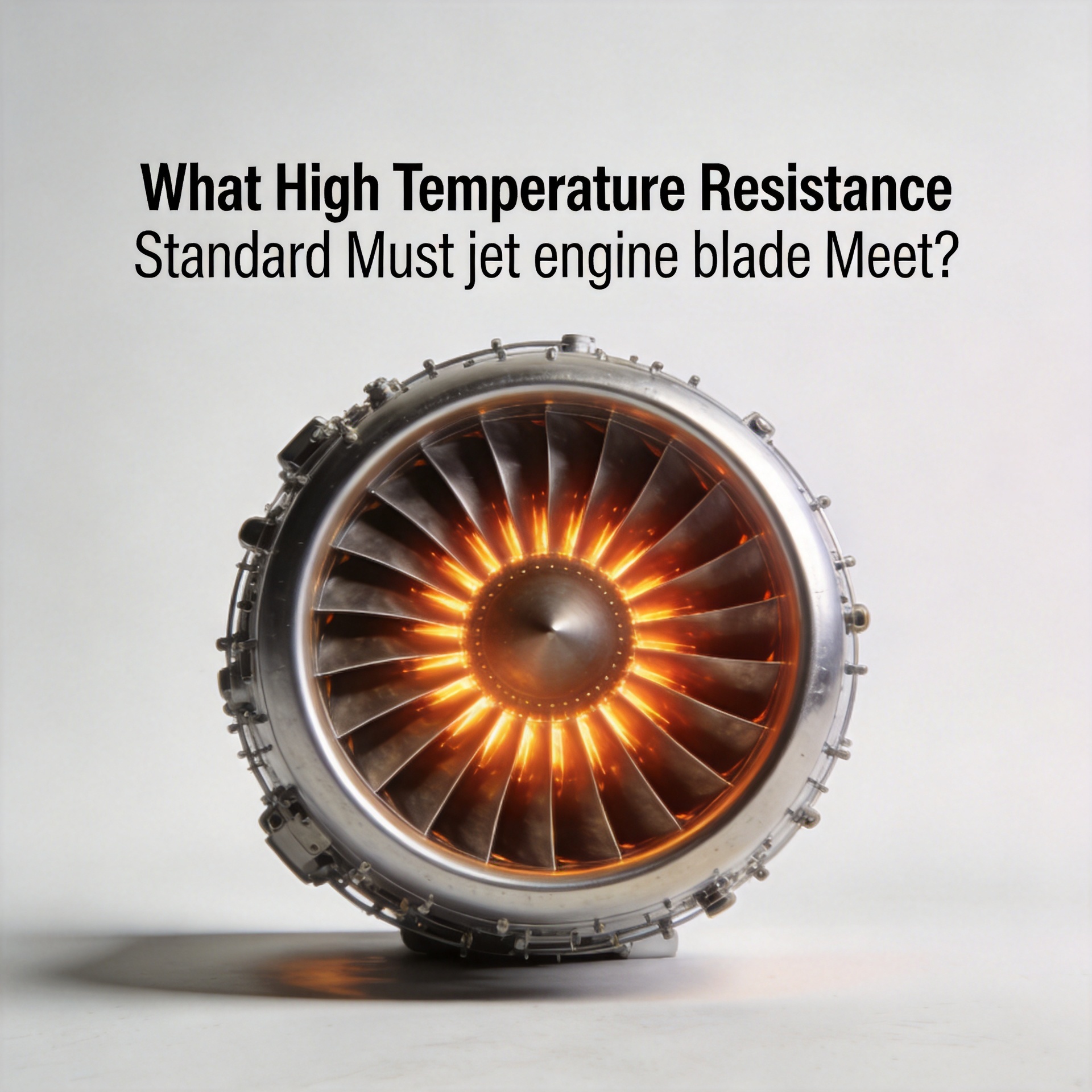
What High Temperature Resistance Standard Must a Jet Engine Blade Meet?
From an aerodynamics and materials engineering standpoint, the operating conditions inside a gas turbine rank among the most extreme any structural component must endure. A jet engine blade rotating at tens of thousands of revolutions per minute while bathed in combustion gases is not simply a mechanical part; it is a precisely engineered thermal barrier. Knowing which temperature resistance standards govern its selection and qualification matters for anyone involved in turbine procurement, MRO planning, or blade supply.
Why Temperature Is the Defining Design Constraint
Temperature resistance sits at the center of every jet engine blade specification for a clear reason: modern high-bypass turbofan engines and industrial gas turbines operate at combustion temperatures that routinely exceed the melting point of unprotected metals. Turbine inlet temperature in advanced commercial engines now exceeds 1,700°C in some designs, while even mid-tier industrial gas turbines expose high-pressure turbine (HPT) blades to gas temperatures above 1,200°C.
The blade material itself does not survive these conditions through raw heat tolerance alone. A combination of high temperature alloy selection, internal cooling channel geometry, thermal barrier coatings (TBCs), and qualification standards determines whether a blade completes its intended service interval or fails early. Each factor is governed by specific standards that must match the engine position and duty cycle.
Turbine Blade Temperature Thresholds by Engine Position
Standards differ considerably depending on where a blade sits in the engine. A breakdown by position makes the specific material certifications easier to follow:
- High-Pressure Turbine (HPT) Blades – First Stage: These carry the highest thermal loading. Metal temperatures at the blade surface typically reach 900°C–1,050°C even with advanced internal cooling. Single-crystal nickel superalloys push qualification thresholds beyond 1,100°C for these applications. This is where the most demanding high temperature alloy specifications apply.
- High-Pressure Turbine – Later Stages: Metal temperatures decrease stage by stage as combustion gas expands and cools. Second- and third-stage HPT blades may see metal temperatures of 750°C–900°C, which often allows conventionally cast or directionally solidified alloys.
- Low-Pressure Turbine (LPT) Blades: Operating at significantly lower temperatures (often below 700°C), LPT blades can tolerate lower-grade superalloys and focus more on fatigue and creep resistance than peak temperature capability.
- Compressor Blades: Front-stage compressor blades in modern engines operate at temperatures typically below 500°C, where titanium alloys and lower-nickel-content wrought alloys are standard. Rear compressor stages, exposed to higher compressed-air temperatures, may approach 600°C–650°C, at which point nickel-based alloys become relevant.
Alloy grade matching to blade position is a qualification requirement embedded in the engine OEM's parts specifications and reflected in the applicable AMS and ASTM standards, not merely an engineering preference.
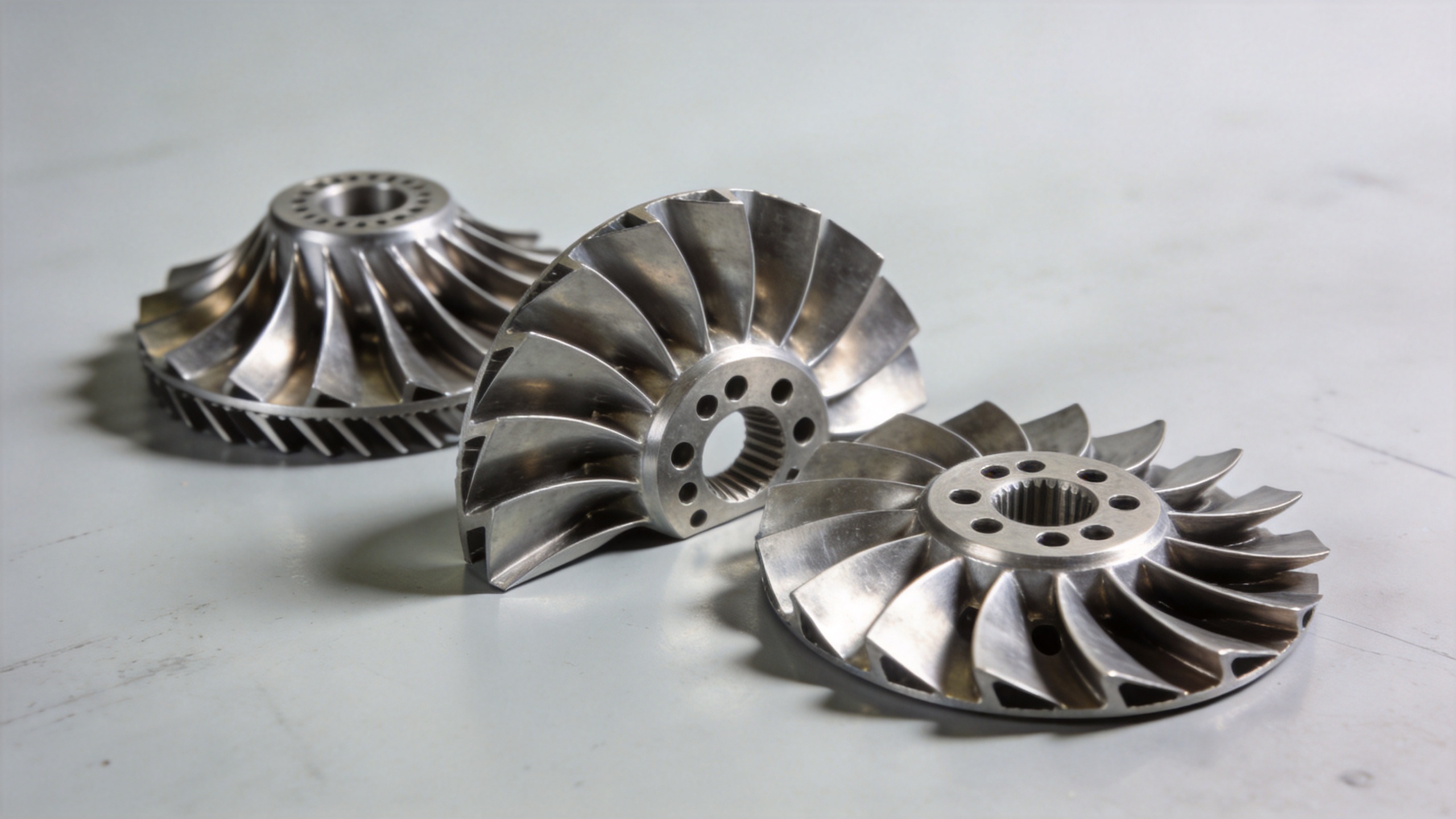
Key High Temperature Alloy Standards: AMS and ASTM
When a jet engine blade supply chain references material compliance, the dominant standard frameworks are the Aerospace Material Specifications (AMS) issued by SAE International and, for structural testing, ASTM International test methods. These serve different purposes: AMS specifications define material composition, heat treatment, and certification requirements for specific alloy grades; ASTM standards define how properties are measured and reported.
Some widely cited alloy standards in turbine blade procurement include:
- Waspaloy (UNS N07001): Governed by AMS 5706 (bar/billet) and AMS 5708 (forgings), Waspaloy is qualified for service up to approximately 980°C (1,800°F). Its combination of oxidation resistance and high-temperature strength makes it a long-standing standard for mid-tier HPT blades and compressor discs.
- Inconel 718 (UNS N07718): Covered under AMS 5663 and AMS 5664, this precipitation-hardened nickel-chromium alloy is more commonly used in compressor blades, discs, and low-pressure turbine components where temperatures stay below approximately 650°C.
- René 80 / René 104 / CMSX-4: Proprietary single-crystal or directionally solidified alloys used in first-stage HPT blades. These are qualified under OEM-specific material specifications rather than public AMS callouts, but testing typically references ASTM E8 (tensile), ASTM E139 (creep and rupture), and ASTM B633 or equivalent coating standards.
- Ceramic Matrix Composites (CMC) – SiC/SiC: Emerging in low-pressure turbine applications, SiC fiber-reinforced SiC matrix composites are qualified under CMC-specific standards and can withstand operating temperatures approximately 110°C–165°C (200°F–300°F) higher than nickel superalloys at equivalent weight.
For procurement teams, a supplier claiming compliance must demonstrate material certification traceability — stating an alloy designation is not sufficient. Mill certificates, heat batch records, and dimensional inspection documentation are part of the standard package.
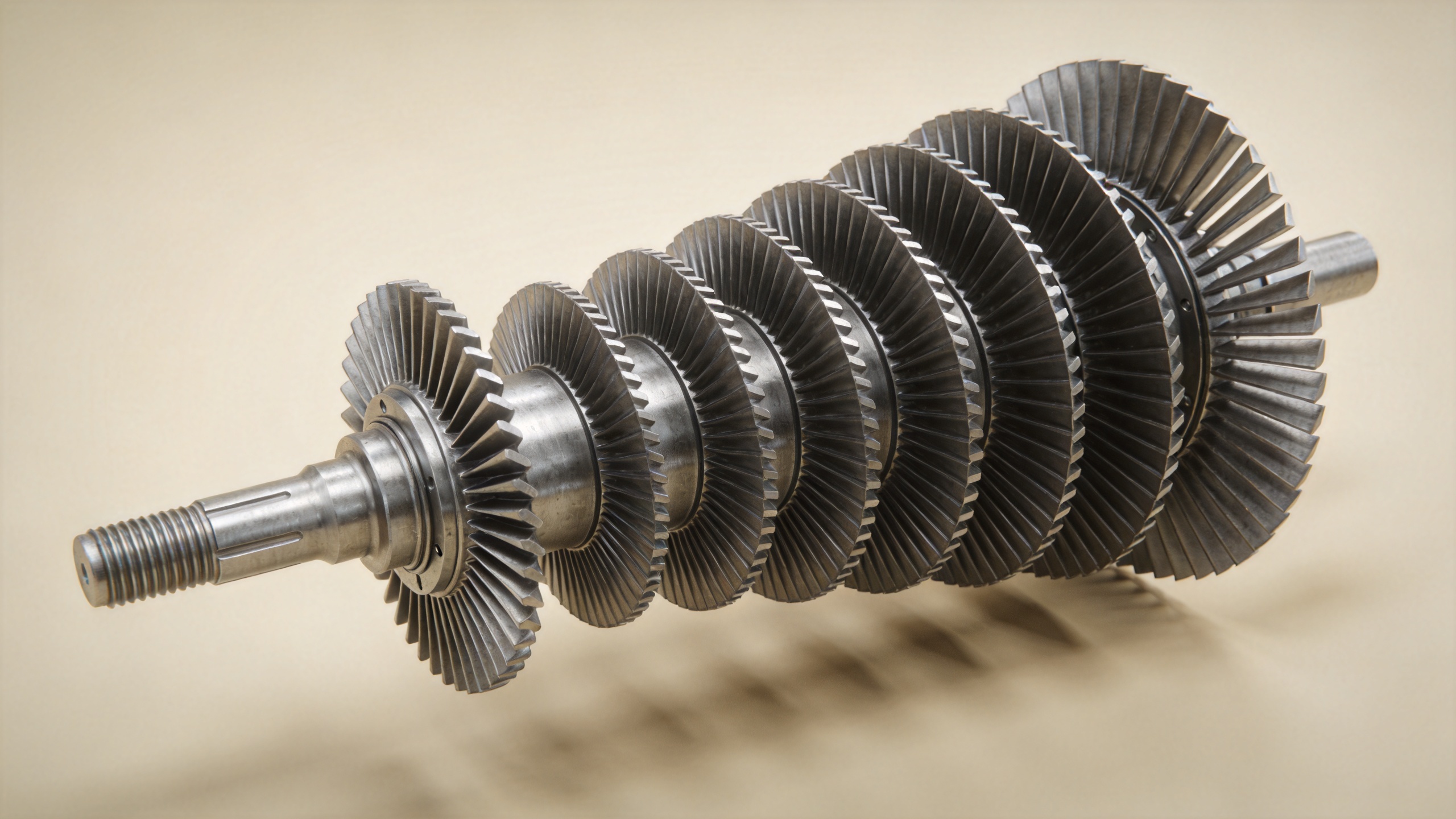
Thermal Stability as a Separate Qualification Criterion
Peak temperature capability is only part of the picture. Thermal stability — the ability of a blade material and its coatings to maintain mechanical and chemical properties through thousands of thermal cycles — is an equally important qualification criterion, and one that gets less attention in purely temperature-focused discussions.
Thermal fatigue occurs when a blade cycles between cold start and full operating temperature. The differential expansion and contraction induces stresses at grain boundaries, coating interfaces, and cooling hole edges. Several failure modes trace directly to inadequate thermal stability rather than insufficient peak heat tolerance:
- Thermally grown oxide (TGO) layer delamination at the thermal barrier coating bond coat interface, leading to spallation
- Phase instability in nickel superalloys at sustained high temperatures, causing precipitation of deleterious TCP phases that reduce ductility
- Oxidation and hot corrosion attack at grain boundaries, particularly in blades operating in marine or high-sulfur fuel environments
Qualifying a blade for thermal stability typically involves cyclic oxidation testing per ASTM B1003 or equivalent, creep rupture testing per ASTM E139 at elevated temperature, and thermal fatigue testing specific to the OEM's cycle profile. These tests document not just initial mechanical properties but how those properties degrade through simulated service exposure.
Matching Blade Material Certification to Engine Class
A question that comes up often in MRO and aftermarket blade procurement is whether a blade with a given alloy certification can serve as a direct replacement in a specific turbine model. The answer goes beyond the material grade alone.
Even when a high temperature alloy matches the nominal alloy designation in the OEM parts manual, the blade must also satisfy the dimensional tolerances, heat treatment condition, and surface coating specification that the engine OEM qualified during engine certification. Documentation traceability from the forging heat batch through to the finished blade inspection report is the only verifiable link between the purchased blade and the underlying qualification test data — not bureaucratic overhead.
Navi Power Technology Co. Ltd., based in Qingdao, China, supplies precision forged compressor blades for gas turbines and aero engines to power operators, MRO service providers, and turbine parts suppliers across Asia, North America, and South America. Their low-allowance forging process — producing airfoil tolerances of 0.1–1 mm — reduces downstream machining and dimensional variability, which directly supports the documentation chain that high-temperature blade qualification requires. Material certification documentation ships as standard with each delivery.
What to Verify When Sourcing a Jet Engine Blade
For engineering and procurement teams evaluating a jet engine blade supplier, these certification and documentation checkpoints align with the temperature resistance standards discussed above:
- Alloy grade and AMS/OEM specification number — confirm the applicable standard, not the trade name alone
- Mill certificate with heat batch number — tracing the alloy to a specific production heat
- Heat treatment records — confirming the correct precipitation hardening or annealing cycle was applied
- Dimensional inspection report — CMM or 3D scan data for key airfoil cross-sections
- Coating specification compliance — for blades with thermal barrier or oxidation-resistant coatings, the coating system requires separate certification
- Creep and oxidation test data — from the material mill or from representative batch testing per ASTM E139 or equivalent
Matching the correct high temperature alloy, qualifying its thermal stability through appropriate test methods, and maintaining the certification chain are the three pillars on which a jet engine blade earns its place in a high-reliability turbine — whether in a new-build engine or in an MRO overhaul.