 EN
EN

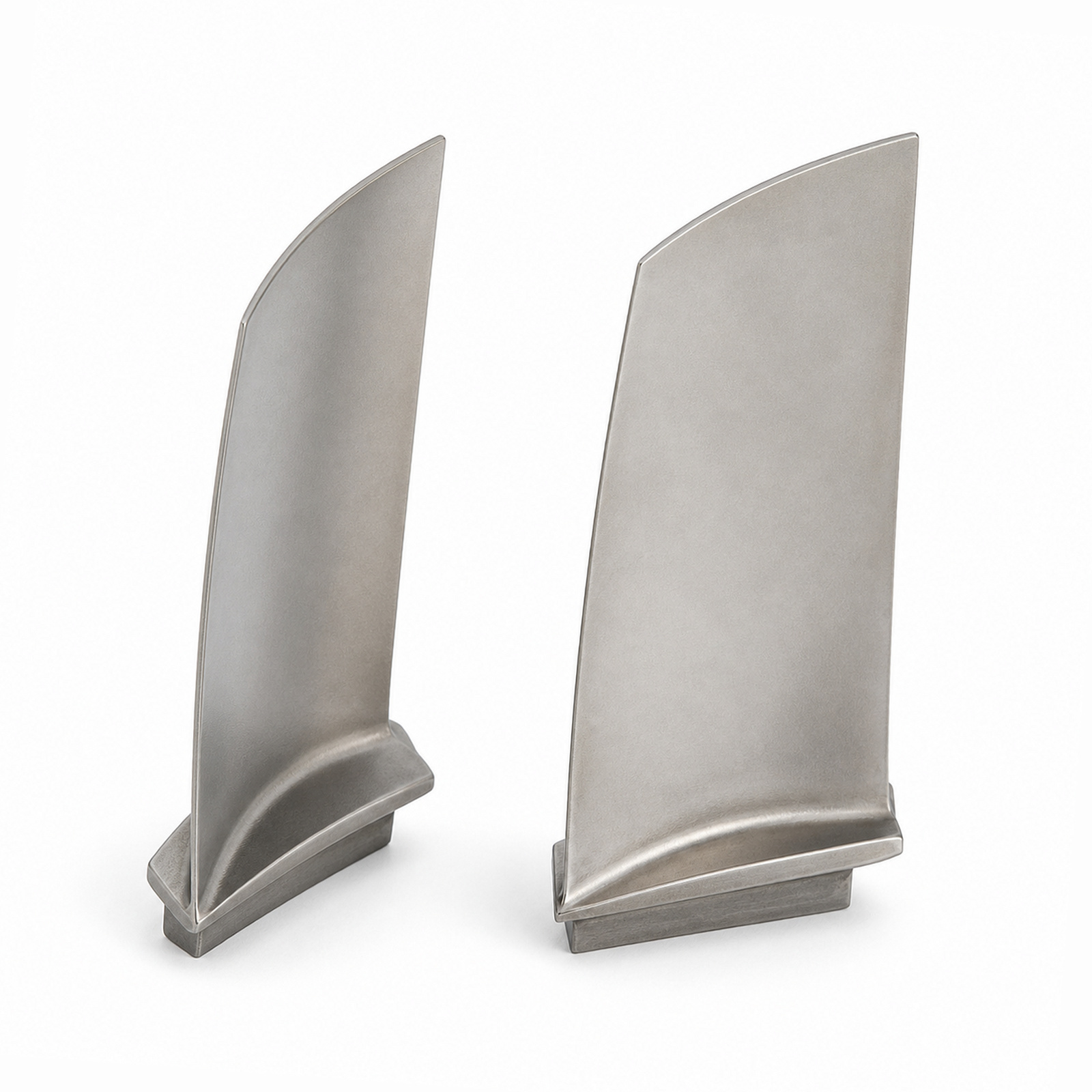
What Inspection Items Are Required Before Stator Vane Delivery?
A stator vane does more than occupy space between rotor stages. Its job is to redirect and decelerate the airflow discharged from the upstream rotor blades, converting kinetic energy into static pressure gain. When that airfoil geometry is off — even by fractions of a millimeter — the compression efficiency of the entire stage can drop. Accepting a stator vane delivery without a structured pre-delivery inspection checklist is a procurement risk that too many engineers underestimate until it causes a problem.
Before you accept any stator vane shipment, it is worth asking: is your supplier providing objective conformance evidence, or are you relying on their word that the parts meet spec? The answer to that question should shape exactly which inspection items you require at the gate.
1. Dimensional Conformance Inspection
Dimensional accuracy is the first and most critical item on any stator vane pre-delivery inspection checklist. The airfoil profile — including chord length at multiple cross-sections, twist angle, leading edge radius, and trailing edge thickness — must fall within the drawing tolerances specified for the particular compressor stage. A stator vane that passes visual inspection can still fail dimensional acceptance when measured properly.
The accepted method for verifying stator vane profile geometry is coordinate measuring machine (CMM) inspection or 3D scanning. Both methods capture multi-point measurements across the full span, not just at a single cross-section. The resulting report should show measurement deviations at each evaluation point against the nominal drawing. Ask your supplier for a sample inspection report format before placing an order — if they cannot produce one, that tells you something important about their process capability.
Root and attachment geometry deserves its own section of the dimensional check. The stator vane root profile must be compatible with the mating component groove geometry. If your operating condition involves blades near tolerance limits on both parts, a root that is technically within the blade drawing tolerance could still create fitment problems at assembly. For critical applications, request that the root profile be verified as part of the standard dimensional report.
Tip geometry and overall span dimensions complete the dimensional check. These influence tip clearance when the vane is installed, which in turn affects stage efficiency over the service life of the part.
 CMM dimensional inspection of a stator vane airfoil profile verifies conformance to drawing tolerances across multiple chord cross-sections.
2. Material Certification and Heat Batch Traceability
Material certification is a threshold requirement in industrial gas turbine component supply, not a differentiator. Every stator vane delivery should be accompanied by a mill certificate confirming the alloy composition and mechanical properties of the raw material used. The certificate should specify the alloy grade, heat number, tensile strength, yield strength, and hardness data at a minimum.
Beyond the mill certificate, heat batch traceability links the specific parts in your delivery to the production run in which they were forged. This is the document that makes failure investigation possible. If a stator vane develops a crack during service, heat batch traceability is what allows the root cause to be traced back to a specific lot of material or forging run rather than leaving the accountability question unresolved.
When sourcing stator vanes from overseas manufacturers, confirm that the material certification is in English and that the alloy grade equivalence to your OEM-specified Western designation is explicitly documented. Inconsistency between the Chinese standard designation and the Western equivalent is a common documentation gap that creates problems during incoming quality review.
3. Surface Condition Inspection
Surface finish on a stator vane affects more than aesthetics. The surface roughness of the airfoil, particularly at the leading and trailing edges, influences boundary layer behavior and is a factor in the erosion resistance of the part under operating conditions. A stator vane with excessive surface roughness — or with scale, forging laps, or tool marks from machining — is not acceptable for delivery, regardless of whether the dimensional check passed.
Visual inspection covers obvious surface defects: cracking, pitting, unacceptable scale, delamination of any applied coating, and handling damage that occurred during the manufacturing or packaging process. Surface roughness (Ra) should be measured at the airfoil surfaces and compared to the drawing requirement. If the stator vane has an anti-erosion or corrosion protection coating, coating thickness and adhesion should also be verified as part of this step.
If your application operates in a high-particulate or corrosive environment, surface condition inspection takes on additional significance. Coating delamination discovered after delivery is a warranty and rework issue. Catching it before acceptance is far preferable.
4. Non-Destructive Testing (NDT)
Standard dimensional and visual inspection does not detect subsurface defects. Forging laps, inclusions, or internal cracks that are below the surface can pass a dimensional check and a visual inspection without triggering any concern — until they propagate during service and cause a premature failure. For stator vanes in high-cycle or high-stress applications, this limitation of conventional inspection is a real risk.
Non-destructive testing addresses this gap. Fluorescent penetrant inspection (FPI) is used to detect surface-breaking defects that are too fine to be visible under normal light conditions. Ultrasonic testing (UT) goes further, detecting subsurface discontinuities without cutting the part open. For most industrial gas turbine stator vane applications, FPI is the minimum NDT requirement for a pre-delivery quality test. Ultrasonic testing is typically reserved for high-criticality applications or for cases where the operating history suggests elevated risk of subsurface defects.
When specifying NDT requirements, confirm with your supplier which methods are available in-house and which require subcontracting. Third-party NDT coordination is an option for buyers who need independent verification, and some manufacturers can accommodate customer-specified NDT agencies before shipment.
5. Documentation Package Review
A complete pre-delivery documentation package for a stator vane shipment should include, at minimum: the dimensional inspection report per batch, material mill certificates with heat batch numbers, any applicable NDT reports, and a packing list that correlates the physical parts to the quality records. If this is a first article delivery from a new supplier, a first article inspection report (FAIR) documenting conformance to drawing across all specified characteristics should also be included.
Documentation quality is itself an inspection item. Reports that are illegible, missing measurement units, or formatted inconsistently with your incoming quality system requirements create extra work during acceptance and undermine traceability. Establishing documentation format expectations at the time of order placement — not at the time of delivery — reduces this friction.
For internationally sourced stator vanes, confirm that all reports are provided in English. Suppliers with established export experience to Asia, North America, and South America typically maintain this as a standard practice. If a potential supplier cannot produce English-language inspection documentation, that is a supply chain risk worth weighing before the order is placed.
6. Packaging and Shipping Condition Inspection
The final item in a pre-delivery inspection is the packaging itself. Stator vane airfoil surfaces — particularly leading edges and trailing edges — are susceptible to handling damage during transit. Individual blade protection, cushioning, and moisture barrier packaging are not optional for precision turbine components shipped internationally.
Inspect the packaging configuration before accepting delivery. Damage found at goods receipt that traces back to inadequate packaging is a cost and schedule problem that a thorough pre-delivery inspection should prevent. Confirm that the packaging used is consistent with what was agreed during the order process, and that no impact or moisture damage is visible before parts are moved to incoming inspection.
Pulling It All Together
A structured stator vane pre-delivery inspection covers six areas: dimensional conformance (CMM or 3D scan report), material certification with heat batch traceability, surface condition (visual and finish measurement), NDT when required by the application, a complete documentation package, and packaging integrity. Together, these checks reduce the risk of receiving a part that looks correct but fails incoming inspection or creates a downstream assembly or performance problem.
Suppliers who can provide all six elements as part of their standard delivery process are demonstrating a level of quality transparency that makes incoming inspection faster and the supply relationship lower-risk. If you are evaluating stator vane suppliers and want to understand what documentation and inspection evidence Navi Power Technology provides as standard with each shipment, contact us at compressorblade.com to discuss your specific requirements.