 EN
EN

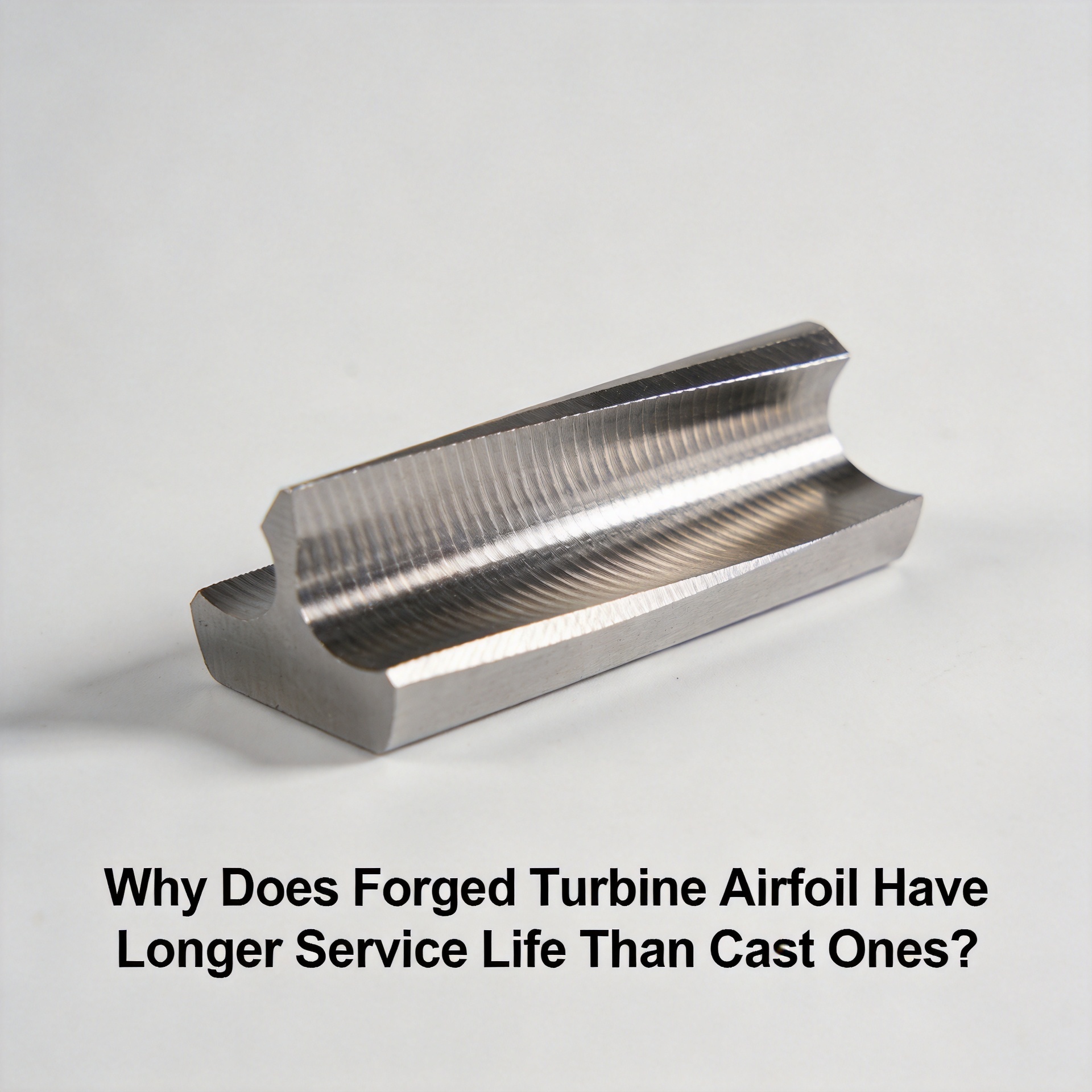
Why Does Forged Turbine Airfoil Have Longer Service Life Than Cast Ones?
From an aerodynamic and gas dynamics engineering perspective, evaluating a turbine airfoil is not solely about the alloy grade listed on a spec sheet. The real differentiator — one that consistently separates components with 20,000-hour service intervals from those requiring replacement at 12,000 hours — is how the part was made, not just what it is made from. This distinction becomes especially important when operators and MRO service providers are choosing between forged and cast airfoils for replacement programs.
Whether forged or cast construction fits better for your specific application depends on your operating environment and maintenance strategy rather than a universal answer. That said, the structural and metallurgical reasons why forged turbine airfoils tend to outlast cast equivalents are well-documented and worth understanding in detail.
The Metallurgical Foundation: Grain Structure and Its Consequences
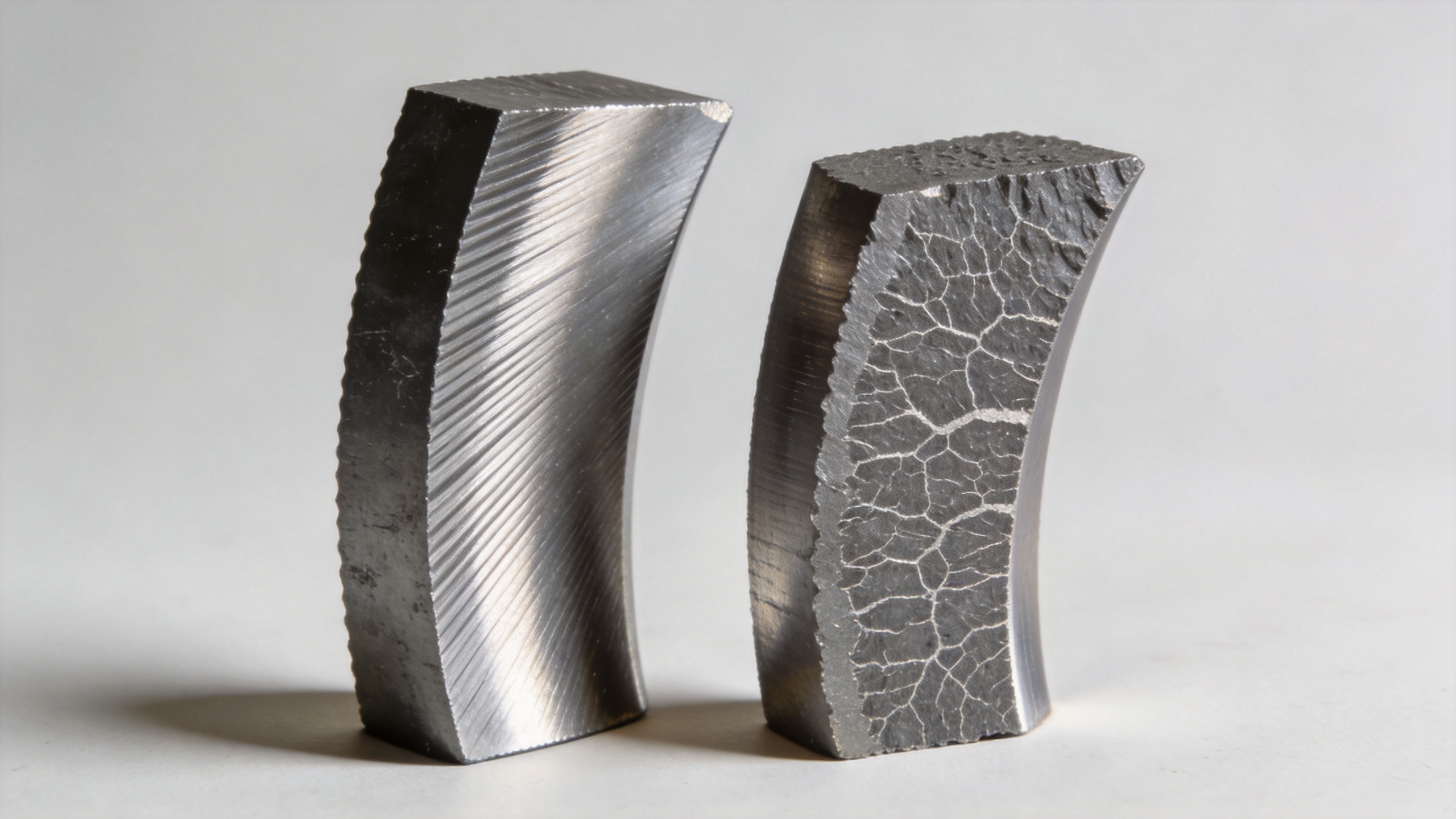
The most fundamental difference between a forged and a cast turbine airfoil is what happens inside the material during manufacturing. In casting, molten metal solidifies in a mold, and as it cools, a dendritic grain structure forms — random in orientation, with potential for porosity, shrinkage voids, and inclusions at grain boundaries.
Forging takes a solid billet and applies compressive force to reshape it into the final airfoil geometry. This mechanical working refines and aligns the grain structure to follow the contour of the finished part. The practical result: higher tensile strength, improved yield strength, and — most relevant to service life — significantly greater fatigue resistance than a cast component made from the same base alloy.
Microstructural differences between forged and cast materials directly influence crack initiation resistance and crack propagation rates. In the cyclic thermal and mechanical loading environment of a gas turbine, fatigue failure is not an instantaneous event — it begins with a microscopic crack at a grain boundary defect, then propagates with each load cycle. A forged airfoil's aligned grain flow creates a more tortuous path for any propagating crack, extending the time-to-failure compared to a casting where cracks can propagate along random dendritic boundaries with less resistance.
Dimensional Consistency: Why Tolerance Matters for Service Life
The connection between dimensional accuracy and service life is one that took many procurement teams a few replacement cycles to fully appreciate. The initial assumption was that a blade matching the material specification on paper would deliver equivalent performance. In practice, what the spec sheet does not reveal is whether the airfoil geometry was held to the original design intent — or whether it was close enough to pass incoming inspection while introducing aerodynamic inefficiencies and stress concentrations that accelerate wear.
Precision forging processes achieve airfoil dimensional tolerances in the 0.1–1 mm range, reducing the need for extensive downstream machining while maintaining airfoil geometry integrity. At this tolerance level, the leading edge and trailing edge profiles remain within the designed aerodynamic envelope. Deviations beyond this range — common in conventional casting where solidification shrinkage is more difficult to control — can alter the local flow field around the airfoil, increasing localized thermal gradients and mechanical stress at specific surface locations.
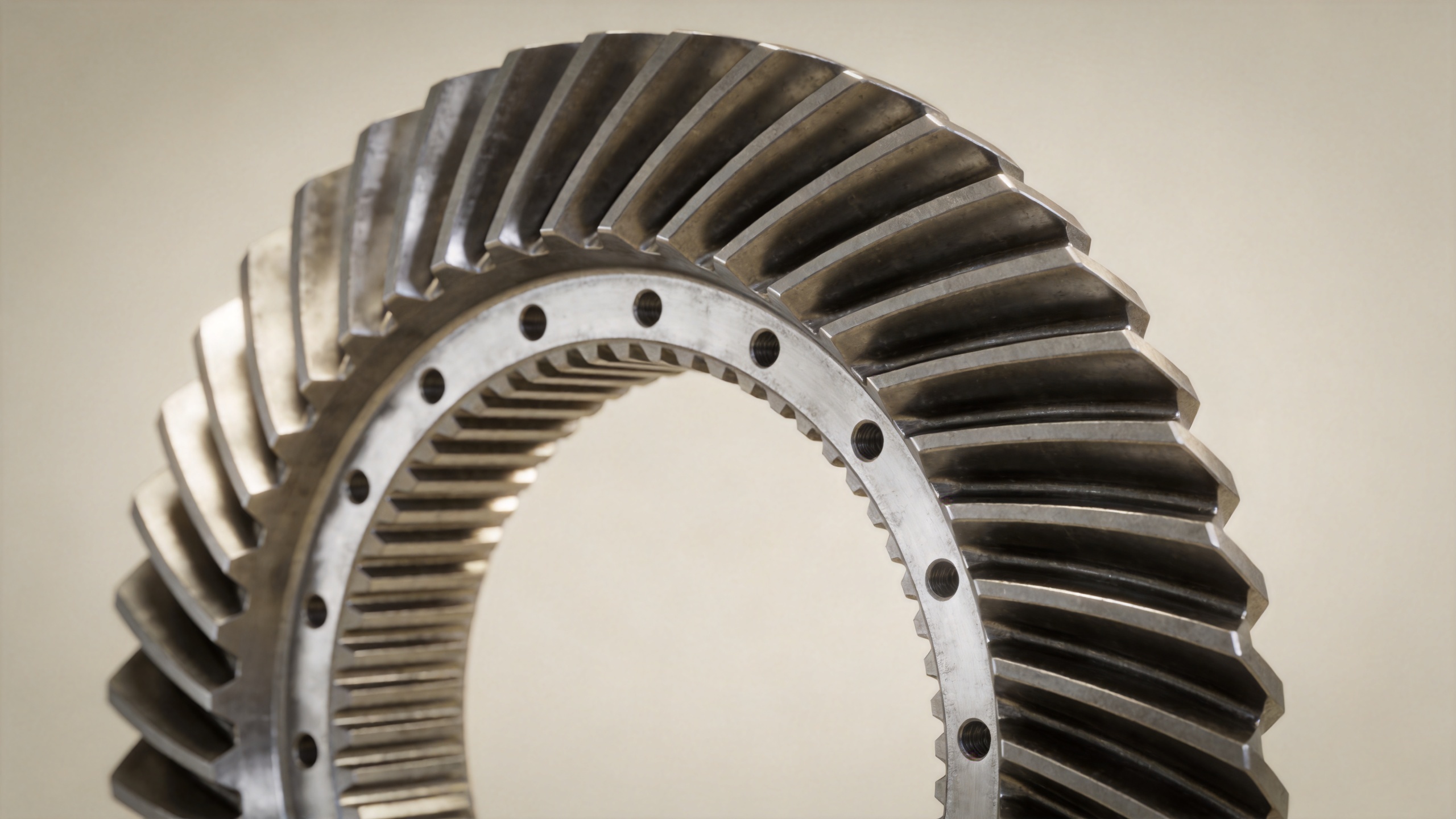
Consistent blade-to-blade dimensional uniformity across production batches also reduces variance in stage performance, which matters particularly in multi-stage compressor and turbine assemblies where flow uniformity through each stage directly affects efficiency and thermal load distribution.
Fatigue Resistance Under Cyclic Loading: The Core Service Life Driver
Gas turbine compressor and turbine stages operate under relentless cyclic loading: high rotational speeds, temperature gradients between hot gas path and cooling air, and vibratory loads from flow irregularities and resonance. Under these conditions, the relevant mechanical property is not peak tensile strength — it is the material's ability to resist fatigue crack initiation and propagation over thousands of operating hours.
Forged components, with their refined grain structure and absence of solidification-induced porosity, tend to exhibit superior low-cycle and high-cycle fatigue performance compared to cast alternatives of the same alloy. What changed the perspective of many MRO engineers is seeing how airfoils rated for equivalent performance parameters actually behaved differently when extended part-load operation, thermal cycling, and real-world contamination were factored in — and how much of that difference traced back to the manufacturing process rather than the nominal material grade.
In the context of turbine airfoil design, a blade that delivers consistent dimensional and mechanical properties over thousands of hours is more valuable than one that peaks higher on a static test but degrades faster under cyclic service conditions. The question is not which turbine airfoil achieves peak output under ideal conditions, but which one maintains the smallest deviation from that performance over a full service interval.
Casting Comparison: Where Cast Airfoils Fit and Where They Don't
This is not an argument that casting has no place in turbine airfoil manufacturing. Investment casting — particularly directionally solidified and single-crystal casting — is an established and valuable process for high-temperature turbine hot-section components where cooling channel geometry complexity makes forging impractical. For high-pressure turbine nozzles and first-stage rotating blades operating at the highest gas temperatures, casting remains the dominant process because the geometry requirements override the grain structure considerations.
The casting comparison becomes most relevant in compressor airfoils and lower-temperature turbine stages, where forging is a viable alternative and where the fatigue and dimensional advantages of forging translate directly into extended service intervals. In these applications, the advantages of forging — grain refinement, dimensional consistency, and absence of solidification-induced defects — outweigh the geometric flexibility advantage of casting.
If your operating environment involves moderate temperature and pressure stages, this guidance generally holds. In extreme high-temperature first-stage applications, the selection logic needs to be revisited with thermal capability as the primary criterion rather than fatigue life alone.
Total Lifecycle Cost: Reframing the Procurement Decision
Early in a replacement program, the natural tendency is to focus on unit price as the primary selection criterion. It takes a few procurement cycles to realize that total lifecycle cost — replacement frequency, labor for overhaul intervals, efficiency losses from dimensional degradation, and unplanned outage risk — is a better predictor of actual value.
A forged turbine airfoil with a higher unit price can deliver lower total lifecycle cost when its extended service life is factored in. The margin between forged and cast unit costs narrows further when procurement volumes are sufficient to amortize forging tooling investment. Processes such as 1-to-3 mold forging reduce tooling cost per part compared to conventional approaches, improving cost competitiveness for replacement programs while maintaining the metallurgical and dimensional advantages of precision forging.
Over a full operating cycle, the difference in replacement frequency between forged and cast airfoils in compressor stages can compound into significant cost and operational impact — particularly for power generation operators where each unplanned outage hour represents measurable lost generation revenue.
Evaluating Forged Turbine Airfoils for Your Application
When assessing a replacement turbine airfoil source, the relevant evaluation criteria extend beyond the alloy grade and nominal geometry. Process capability documentation — forging dimensional capability data, grain flow verification, and batch-level inspection records — provides more actionable information about expected service life than a static compliance certificate.
For MRO and procurement teams working with gas turbine compressor stages, the transition toward forged airfoils is typically driven by service history data rather than theoretical arguments: components that consistently exceed the projected replacement interval, with dimensional reports showing maintained geometry after extended service, make the manufacturing process difference visible in operational terms.
The exact threshold varies depending on your operating profile — rotational speed, stage temperature, and inlet contamination — but the underlying reason forged turbine airfoils tend to outlast their cast counterparts is consistent across applications: aligned grain structure, tighter dimensional control, and the absence of solidification-induced defects create a part that is more resistant to the specific failure modes that define service life in cyclic thermal and mechanical loading environments.
For procurement inquiries or technical documentation on precision forged compressor blade capabilities, contact Navi Power Technology Co. Ltd. at [email protected] or visit www.compressorblade.com.